Strategic health management at Bosch
Antje and Max show how Bosch approaches health management globally while implementing it locally
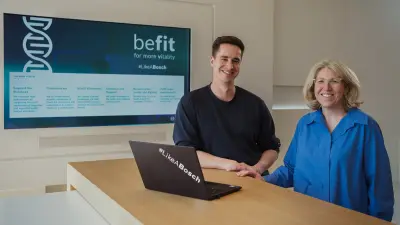
Good health is the foundation for people to reach their full potential. That is why Bosch is investing in comprehensive health management worldwide. Antje and Max explain what Bosch is doing to support the health of its associates, which projects are planned, and how these measures contribute to the company's competitiveness.
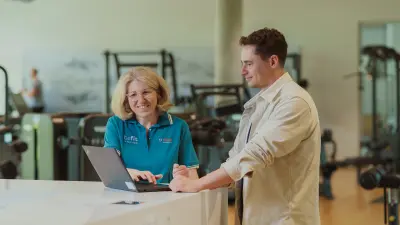
Antje and Max work in central health management at Bosch. Their work focuses on promoting and safeguarding the health of associates. Antje holds a management position within the central unit and is involved in the day-to-day running of projects. She also carries medical and legal responsibility for occupational health issues. Max focuses on project management and project control. Among other things, he is responsible for connecting the departments involved and promoting efficient collaboration.

Added value for associates and for the company
Health management is a strategic approach at Bosch, designed to safeguard the health and performance of its associates. It consists of three components, Max explains: “Whether you look at the company structure, associates’ working conditions, or individual behavior, all levels have an impact on associates’ health. To create the greatest possible added value, we therefore take a strategic approach to everyone's health.” And for good reason: “Healthy associates and functioning teams are the foundation of a healthy company. And a healthy company is more competitive in a volatile environment. Associates are more innovative, more adaptable, and better able to learn. This topic therefore plays a major role for us. It’s very important to me to emphasize that illnesses cannot always be avoided. However, through our preventive measures, we want to promote health and empower associates, including those with health limitations, to enhance their own performance,” Max explains.
Some of the measures implemented at Bosch are required by law, for example under occupational safety, compliance, or the employer's general duty of care. But Bosch goes further than that, Max emphasizes: “One major strength, for example, is our internal contact points with experts from social services and occupational medicine. They provide easily accessible answers to health-related questions, offer advice on social and psychological issues, and, if necessary, refer people to appropriate services. In addition, we offer many other services, ranging from training courses for managers on healthy self-leadership and managing others, to sports programs and themed health action days.”
Health management at Bosch: Its origins and current understanding
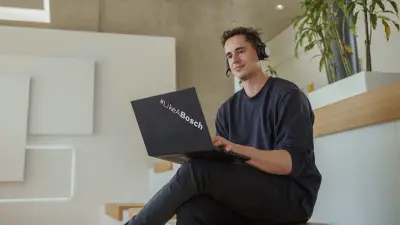
Health was already a major focus for company founder Robert Bosch. For example, he founded the Robert Bosch Hospital in Stuttgart at the beginning of the 20th century. “Within the limits of what was possible, Robert Bosch promoted health early on and ensured healthy working conditions. His activities back then were certainly pioneering. It’s no wonder, then, that health promotion remains an important part of the company culture to this day,” explains Antje.
Today, a central unit is responsible for strategic health management, and Antje and Max are part of it. For Max, however, this unit is not the same thing as health management across the company: “Health management at Bosch is not a department, but rather a value system that many people worldwide live and work by. This includes, for example, our social counseling services in our specialist departments. A manager who understands the importance of health for work and functioning teams, and who knows the basics of motivating individual associates, is also part of health management at Bosch.”
How health projects benefit associates worldwide
In order to act as holistically as possible in strategic health management, the team has defined six areas of action:
Support the business
In this area of action, we implement measures that contribute to profitability and business objectives. It is the overarching dimension.
Example projects: The global employee survey Bosch Pulse Check also includes questions on health topics. Through the survey, we identify areas for action, and our regional offices then work with management to design measures that can be implemented jointly.
Another major lever is the managers themselves. This year, for example, two additional training programs for managers were launched. With training on mental health and psychological safety, we are helping to create a work environment where performance, innovation, and well-being are compatible.
Communicate
To ensure that health-promoting measures are actually used, we need to reach the relevant target groups. Given the diversity of our associates and their different professions and workplaces, this is not always easy. We therefore regularly review our communication channels and optimize them where possible.
Example project: With the befit-App, our communication app, we can communicate our offers and topics centrally and reach associates, from managers at all levels through to associates in production, the office, and the field.
Health Promotion
The topic of Health Promotion covers all initiatives aimed at promoting health literacy. The goal is to empower associates to take charge of their own health and adopt health-conscious behaviors using scientifically based methods.
Example project: Around the World Health Days established by the World Health Organization (WHO), we at Bosch regularly organize themed days and weeks with lectures and activities. During awareness weeks like Mental Health Week, we reach tens of thousands of associates from more than 20 countries.
Guidance and Support
We want to offer our associates support structures and help them access the right services, both within the company and through the public health system. This area of action is dedicated to that goal.
Example project: The “OncoCure” project is a support program in Germany and China for cancer patients. Associates with cancer receive the best possible medical care and social support. As part of the program, Bosch offers an independent second opinion on available diagnostic and treatment options. In suitable cases, this support also includes genetic analysis to tailor treatment to the individual — for example, to assess the effectiveness and tolerability of medications or to determine eligibility for clinical trials.
Being accessible — locally and digitally
The goal of this dimension is to make it possible for associates to raise their health related concerns with someone, either locally or digitally. They should know which services are available and be able to access them easily. It is about breaking down barriers.
Example project: In Brazil, there are medical care centers for the two locations in Curitiba and Campinas. They act as the central point of contact for associates who need immediate medical attention for minor to moderate illnesses. Its easy accessibility lowers the barrier to access for associates and strengthens their perception of Bosch's commitment to associate well-being as an employer.
Fulfil legal requirements
This area of action covers all measures that ensure compliance with legal regulations. The goal is to minimize health risks and fulfill the company’s necessary healthcare obligations.
Example project: In Brazil, companies are now required to conduct psychological risk assessments and take action where necessary. A similar requirement has been in place in Germany for some time. That is why we foster global collaboration to enable a worldwide knowledge transfer.
Health that extends beyond the workplace
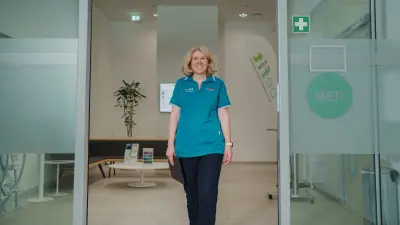
Bosch's needs-based range of services is something special. But does this health management have an impact beyond Bosch's own sites? “People spend a lot of time at work. When Bosch, as an employer, strives to protect the health of its associates, this naturally has a positive influence on the health of the wider population. In countries such as Germany, where there is good public healthcare, Bosch's health management is more internally focused. In other countries, India for example, the influence extends further, and the employer's role in health matters becomes more significant,” explains Max. “There are sites where company doctors become primary care contacts for associates, and sometimes also for their families. Through this work, they complement a country’s healthcare system or even create services that would otherwise be lacking,” adds Antje.
Worldwide project work
Antje and Max's team is constantly implementing new projects. “In principle, every project we start is based on a need. This could, for example, be training for managers on how to deal with psychological stress among associates,” reports Max. “However, there are also legal requirements that Bosch has to address. To implement projects of all kinds as globally as possible and to leverage synergies, we engage in worldwide exchange formats with our colleagues. For example, we are currently planning a meeting in India with our regional health managers,” explains Antje.
Many different factors influence the structure of health management. “First, there’s the organizational structure in each country. In some countries, there are specialized institutions that create country-specific structures we can collaborate with. In other countries, however, there are individual people we communicate with. In India, for example, our central contact person is Rahul, the Indian chief occupational health doctor. He has also been part of our central team since 2025. In other countries, colleagues from occupational health and safety or HR manage a large part of the measures,” explains Max. Antje adds that the legal framework also plays a role in the design: “In Spain, for example, medical specialists have a different position in the healthcare system than in Germany or the USA. The role of occupational medicine therefore differs significantly between countries. For example, a doctor in Spain can prescribe medication at the expense of the public health system. In Germany, by contrast, our focus is strongly on the workplace and not on healthcare provision.”
Focus on local conditions
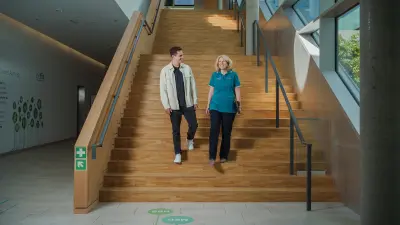
Antje and Max aim to meet global requirements through their work while also allowing room for local adaptation. “I would say that health management is present everywhere at Bosch, but the number of people involved and the way responsibilities are distributed vary,” Antje notes. According to Max, these differences are mainly driven by local needs: “Of course, in the region around Bosch's headquarters in Germany, we have comparatively strong structures and a broad range of services. This is simply due to the large number of associates on site. Even at our smaller locations, we offer great programs for associates that are tailored to their needs, from reintegration after illness to running events and psychosocial support services.”
At Bosch, more than 410,000 associates worldwide have individual health-related needs, and new legal requirements are constantly emerging. All of this is assessed and coordinated by the department for strategic health management. Max confirms that this is not always easy: “The company’s size and decentralized structure can be challenging for a small department like ours. We want our measures to have their full impact. To achieve this, we’re always looking for the right people to drive projects forward, form project teams, and secure funding. This requires a lot of commitment, but the diversity of topics and the intensive exchange within our interdisciplinary team and beyond are what make our work so enjoyable.”
befit — the health label at Bosch
Most Bosch associates probably access health management through the befit label. But what is befit? “befit is a value concept that governs health-related topics at Bosch, from counseling services to nutritional advice. It is an international initiative that originated in a company agreement. The label is now widely used,” Max explains. “The most well-known example is probably the befit meal. This refers to healthy food in our canteens that meets certain criteria to be labelled as such. Of course, this is just one of many offerings under this label,” he adds.
Creating added value together
Antje and Max’s areas of responsibility are wide-ranging, which makes them all the more exciting. They range from conception and innovation to communication. “Although we in strategic health management aren’t directly involved in the development of Bosch products, we have numerous points of contact with other departments. We work in an international context and therefore gain a lot of exposure to different cultures. That’s incredibly interesting and something I personally enjoy,” reports Max. “The personal contact with people is truly special in our work. At Bosch, we have a very broad portfolio and continuously adapt it to current developments together with our colleagues. When people tell us how much they appreciate the individual support, for example, it’s fantastic feedback for our work,” Antje concludes.
Profile Antje
Antje
Specialist in occupational medicine
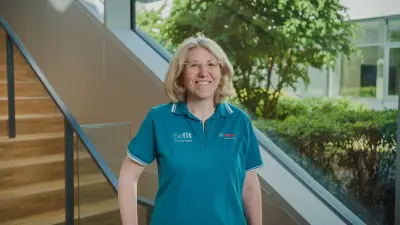
Antje's path led her from medical school in Göttingen to a hospital, where she completed her specialist training in internal medicine. In 2017, she joined Bosch to continue her training as a specialist in occupational medicine at several Bosch locations. After her parental leave, she co-headed the occupational health department with a colleague. In 2024, she moved into her current position in central health management to contribute to health-related issues across the region. She shares the management position with Falko Papenfuss as part of a job-sharing arrangement.
Profile Max
Max
Project manager for international health management
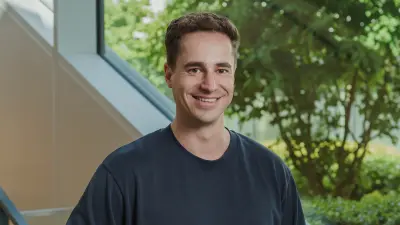
Max studied sports, business administration, and philosophy for his bachelor's degree at the University of Regensburg and completed his studies at the Technical University of Darmstadt with a master's degree in sports management. He then worked at the University of Stuttgart in health management and the Agility Lab, the university's innovation lab for new work and agile working methods. In 2023, Max joined Bosch, where he continues to work as a project manager for international health management.