Lower fuel consumption, better performance
Bosch’s first gasoline injection system for passenger cars
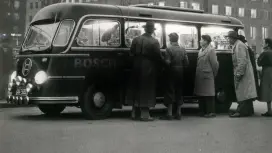
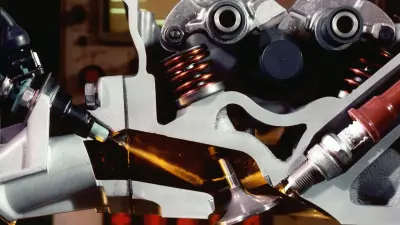
In 1951, Bosch introduced the first gasoline injection system for automotive engines. What began as a niche solution for small cars evolved into a business segment that shaped Bosch’s automotive technology activities for decades.
News via in-house mail
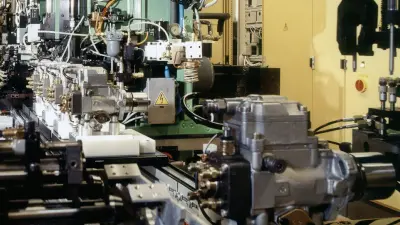
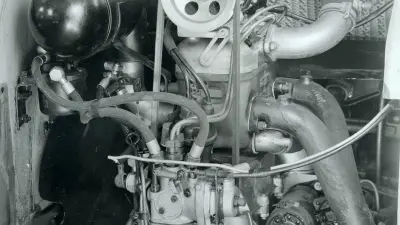
From the outside, the envelope in the manufacturing management’s mailbox at the Feuerbach plant in the fall of 1951 was unremarkable. What was inside, however, was a game-changer: the approval for manufacturing a new product with the type designation PFM2. The abbreviation referred to an injection pump for small cars with two-stroke engines. These inexpensive and simply designed engines were very popular in the early postwar period, but they were truly gas-guzzlers. Bosch aimed to wean them off that with fuel injection, which replaced the traditional carburetor.
First customers
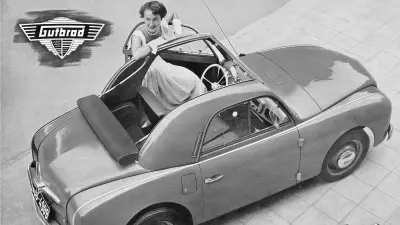
Bosch’s first customer for this new product was the automaker Gutbrod, whose Superior model was intended to compete with the VW Beetle. The Superior was a bit smaller, though — designed for just two people and equipped with a spacious roll-back roof. Shortly thereafter, a second customer joined the list: Goliath, a manufacturer of passenger cars and trucks, also equipped its two-stroke vans with fuel injection. This made the vehicles more fuel-efficient and more powerful.
From the Oiler to fuel injection: a long journey
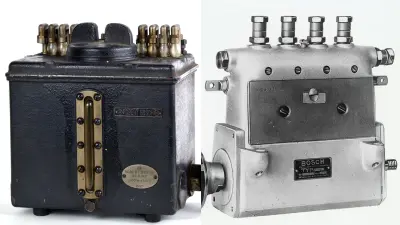
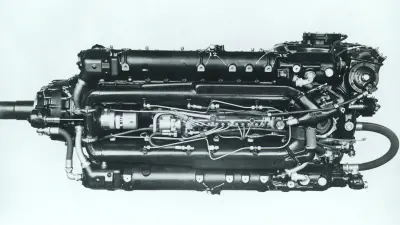
The success of the gasoline injection system was built on decades of experience. Bosch had begun gaining expertise in lubrication pumps back in 1909. From 1927 onward, the company perfected the art of precisely delivering fluids under high pressure with its diesel injection system. Then, starting in 1930, Bosch further developed this technology for gasoline injection pumps in aircraft engines in order to solve a serious safety problem: in carburetor engines, abrupt flight maneuvers or high altitudes could lead to the engine stalling or icing up — posing a high risk of a crash. Bosch’s direct injection system eliminated these issues and also made it possible to greatly increase engine power.
Gasoline injection in a political context
However, this project couldn’t be carried out without partners in the fields of aerospace research and industry, and so in 1930, Bosch began working closely with the Deutsche Versuchsanstalt für Luftfahrt (Germany’s national center for aviation research, founded in 1912) and the aircraft engine manufacturers Daimler-Benz, Junkers, and BMW. After Adolf Hitler seized power in 1933, aircraft engine injection quickly drew the attention of the regime. The technology was of interest to the Luftwaffe (German air force) because it gave military aircraft an advantage over those of potential adversaries in terms of performance and maneuverability. As a result, Bosch equipped engines for military aircraft with this technology.
A new beginning after 1945
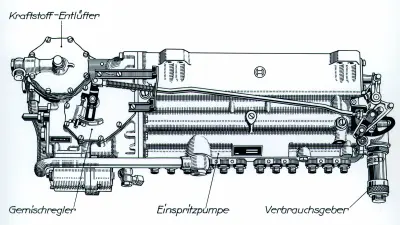
After the end of the second world war, the Allies prohibited German companies from manufacturing aircraft and aircraft technology. However, with the onset of mass motorization in Europe, Bosch could put its technical expertise in injection technology into mass production. Injecting fuel directly into the cylinder eliminated the fuel loss typical of two-stroke models and allowed the engine to operate at a higher compression ratio. That meant a good 10 percent increase in performance with about 20 percent lower fuel consumption. In addition, fuel injection meant that the fuel mixture could be adjusted much more effectively to the engine’s operating conditions. This resulted in smoother operation and jerk-free driving, regardless of whether the engine was warm or cold, and across all load ranges and engine speeds.
A stepping stone to great success
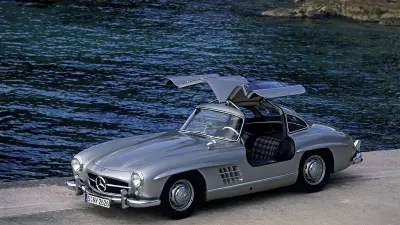
The small two-cylinder injection pump served only a niche market, however. Bosch’s goal was to replace traditional carburetor technology with fuel injection and thus create a large, promising business segment. In 1954, the technology was unveiled to the public for the first time in a high-performance vehicle, the Mercedes-Benz 300 SL “Gullwing.”
Thanks to Bosch technology, the newly designed engine achieved a maximum of 215 PS, which enabled this unusual sports car to reach a top speed of up to 235 kilometers per hour. At that time, the average vehicle couldn’t even manage 50 PS, and top speeds were just over 100 kilometers per hour.
Although this car initially sold only in small numbers, it was merely a matter of time before it penetrated the market and gave way to smaller, mass-market models.
New approaches, both electronic and digital
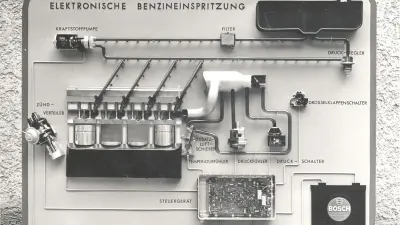
Over the next few decades, Bosch accelerated this technological paradigm shift with groundbreaking innovations. The D-Jetronic, the first successful mass-produced electronic gasoline injection system, debuted in late summer 1967. Twelve years later, in May 1979, Bosch became the first company to introduce a computer in a driving-relevant role with the Motronic digital engine management system, which featured a microprocessor and erasable memory. Bosch’s history of gasoline injection goes back much further than 1951, and has set standards that remain relevant to this day.
Author: Dietrich Kuhlgatz