Software-driven mobility — the car of the future is personalized
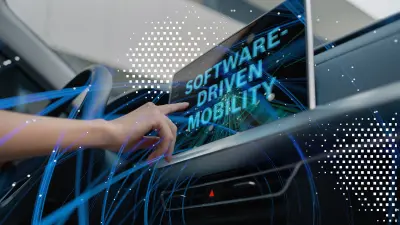
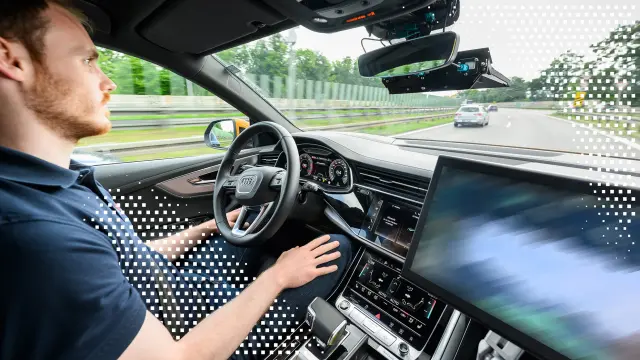
For a long time, driving was a mechanical process: a vehicle with an engine, a steering wheel, and four wheels. Even though much of what we see on the outside has remained familiar, the foundation of driving has changed. New exterior sensors and increasingly intelligent systems inside the vehicle have transformed how mobility works. Sensors now capture everything happening around and within the car. Software interprets this information and supports drivers in situations where humans once had to react on their own. Capabilities that once came purely from mechanical components now originate from code — and that code continuously evolves.
This shift creates a new understanding of mobility. A vehicle that detects situations, learns from experience, and becomes more intelligent with every update. A system that redefines safety, enhances comfort, and adapts to people rather than the other way around. Often invisible, yet unmistakably noticeable.
Bosch operates precisely in this layer — the layer that connects the physical and digital worlds. It integrates data from exterior sensors and cameras with information from chassis systems, powertrain, and driver assistance functions inside the vehicle. Bosch software brings all these signals together, transforming a technical object into a learning, connected system.
Bosch technologies form the digital nervous system of modern vehicles and shape a future in which mobility is more connected, more efficient, and more personal than ever before.
Software-driven mobility becomes reality
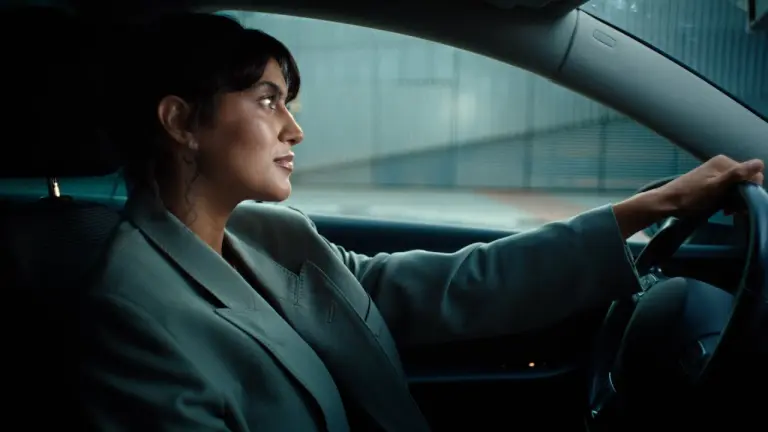
Loading the video requires your consent. If you agree by clicking on the Play icon, the video will load and data will be transmitted to Google as well as information will be accessed and stored by Google on your device. Google may be able to link these data or information with existing data.
This short video shows how Bosch is already making software-driven mobility a reality today and which technologies are driving the transformation inside modern vehicles.
When vehicles evolve like smartphones
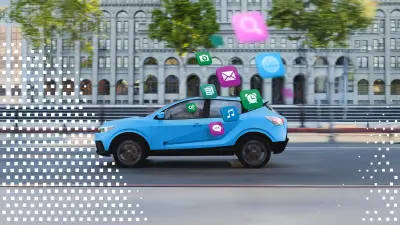
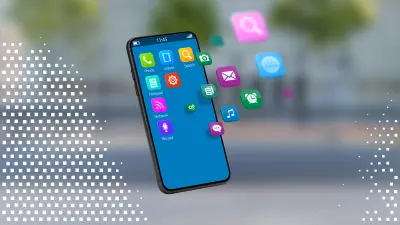
Imagine a vehicle that behaves like a smartphone: it receives updates while parked in the garage, expands its capabilities overnight. For example with a more precise parking assistant or improved range for an electric vehicle. It recognizes preferred routes, warns of icy conditions at an early stage, and communicates with other vehicles to help avoid congestion. This transformation is what defines software-driven mobility. A modern vehicle is no longer just a collection of mechanical components, but a learning system with software at its core. It connects the powertrain, braking systems, sensors, and infotainment — creating a driving experience that becomes safer, more comfortable, and more personalized.
Three modes that make vehicle dynamics tangible
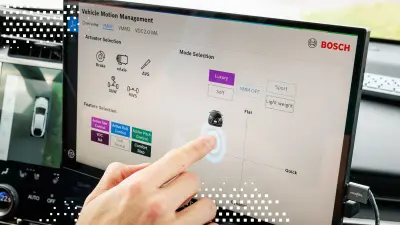
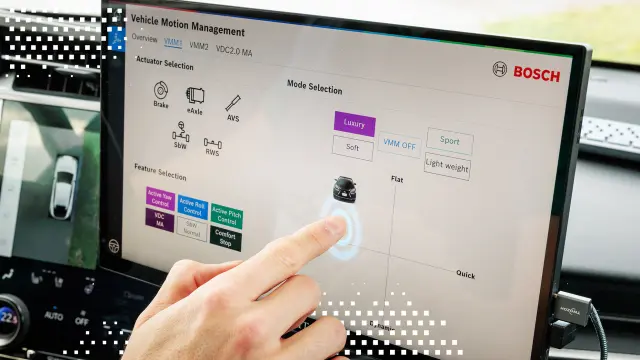
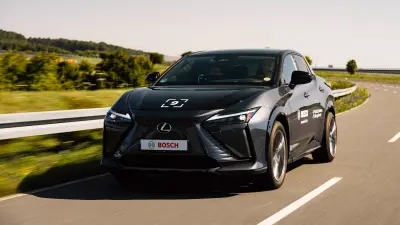
And how does this look in practice? A test on the racetrack demonstrates just how strongly software shapes driving behavior. Three driving modes — sport, luxury, and city — were tested in short challenges to make the differences in agility, comfort, and maneuverability tangible.
Together with test driver Philipp, three videos were created that show how software precisely coordinates braking, steering, powertrain, and stability, and how differently a single vehicle can feel depending on the selected mode.
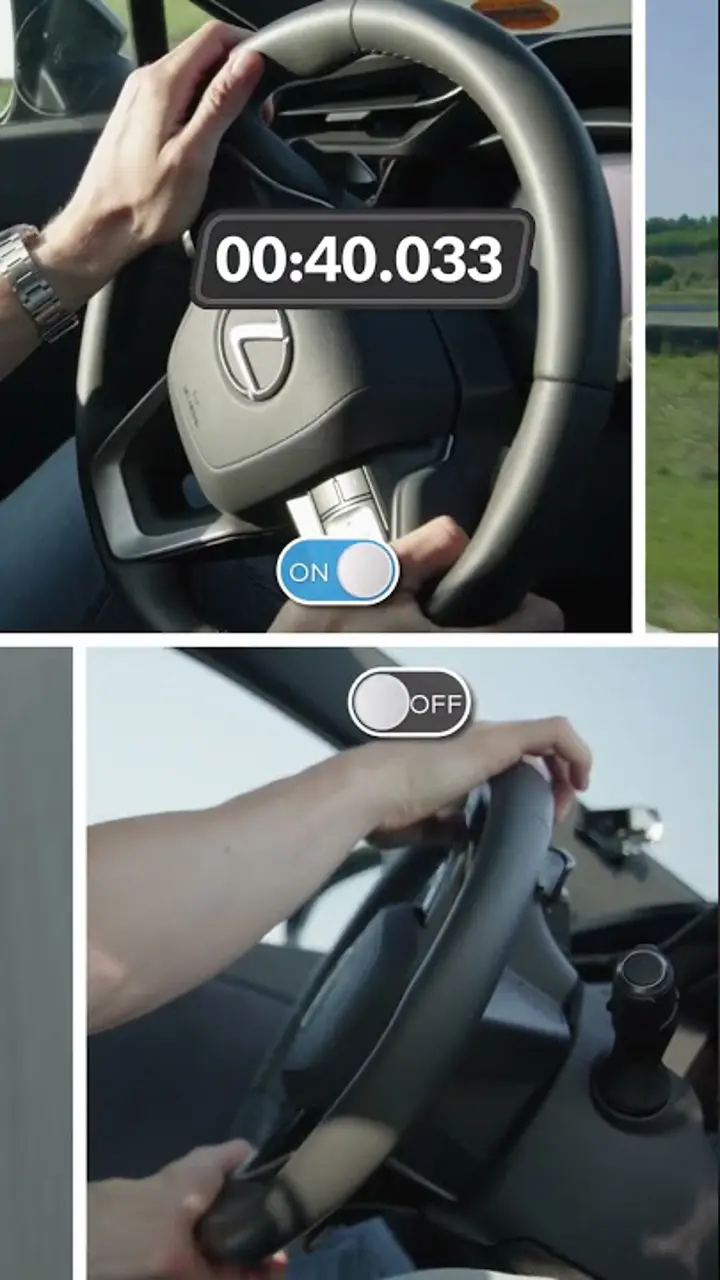
Sport challenge video
Can Philipp beat the clock in Sport mode? Experience Bosch Vehicle Motion Management in action.
Loading the video requires your consent. If you agree by clicking on the Play icon, the video will load and data will be transmitted to Google as well as information will be accessed and stored by Google on your device. Google may be able to link these data or information with existing data.


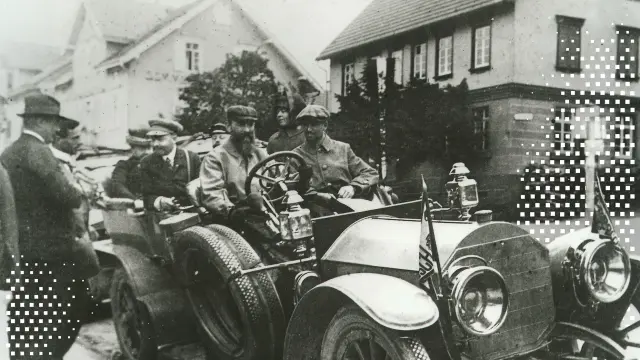
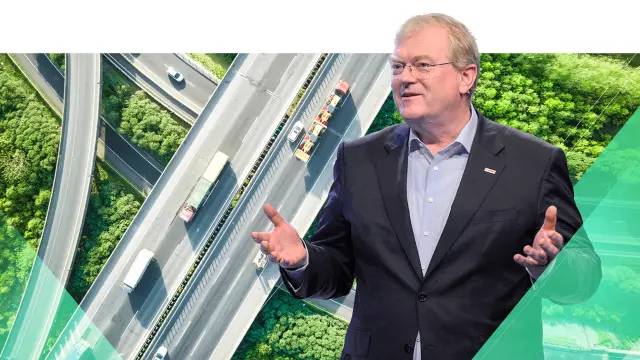
Software won’t only change how we use and experience cars in the future. It will also change the way cars are engineered. For some time now, Bosch has also seen itself as a mobility software company.
Q&A — understanding software-driven mobility
Software is transforming mobility. From vehicle architecture to connected ecosystems. Here you’ll find answers to frequently asked questions about software-driven mobility, software-defined vehicles, and the role Bosch plays in this development.
What does software-driven mobility mean?
Software-driven mobility describes the shift toward vehicles and mobility systems that are increasingly controlled, connected, and continuously enhanced through software. Functions no longer originate solely from mechanical components, but from intelligent software modules that influence vehicle dynamics, safety, energy efficiency, and comfort.
At Bosch, hardware, software, and cloud services come together to create a flexible, learning, and future-proof mobility ecosystem.
What defines a software-defined vehicle?
A software-defined vehicle clearly separates hardware from software, making vehicle functions flexible and adaptable throughout the entire life cycle — similar to a smartphone. Central vehicle computers and zone controllers replace numerous individual control units and create the foundation for software to take center stage.
This architecture enables over-the-air updates, greater computing power for AI-based functions, and the ability to bring new features into the vehicle directly via software upgrades — without any changes to the hardware.
What role does personalization play in software-driven mobility?
Through connected control units, AI, and cloud data, vehicles can tailor settings and assistance functions much more precisely to the driver. The software responds to personal preferences, surroundings, and driving style — from individual temperature profiles and vehicle dynamics to intelligent energy management.
Why is energy efficiency a software topic today?
Efficient electromobility requires precise energy management. Software coordinates the battery, powertrain, and recuperation — the recovery of braking energy — as well as climate control and other consumers. It responds to temperature, driving style, and traffic conditions.
Intelligent energy management increases range, reduces losses, protects the battery, and optimizes the overall energy balance. To achieve this, Bosch develops control algorithms, sensor technologies, and thermal management systems.
How do over-the-air (OTA) updates work in a vehicle?
OTA updates make it possible to update vehicle software without visiting a workshop. Safety-relevant data is transmitted in encrypted form, temporarily stored in the vehicle, and installed only after verification.
Bosch develops the required software platforms, security mechanisms, and backend systems that enable updates throughout the entire vehicle life cycle.
How are driver assistance systems and software-defined vehicles connected?
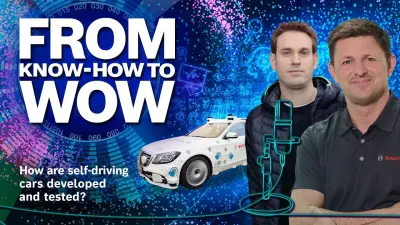
Complex driver assistance systems (ADAS — Advanced Driver Assistance Systems) require significant computing power and sensor data fusion to reliably perceive the vehicle’s surroundings. In software-defined vehicles, these functions run on central high-performance computers that integrate data from radar, camera, ultrasonic sensors, and the cloud.