The birth of a global company
Robert Bosch sets up a workshop in 1886

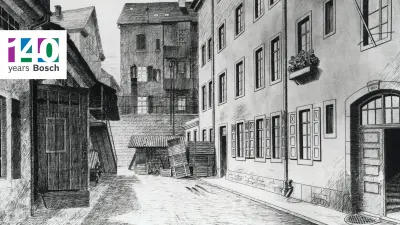
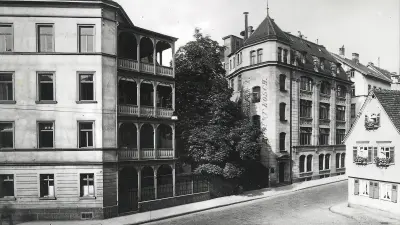
In November 1886, a young man opened a workshop in Stuttgart offering electrical engineering products and services. By choosing Stuttgart — the capital of the Württemberg kingdom at the time and home to the monarch — he selected a location where industrialization had arrived late and rapid growth was far from guaranteed. Yet despite some early challenges, that small workshop would eventually grow into a highly successful global company: Bosch.
A bold beginning and customer focus
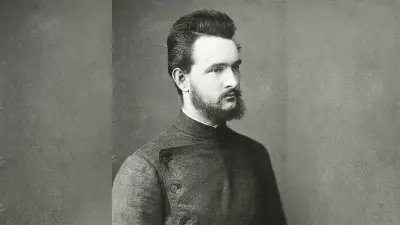
In the summer of 1886, a nearly 25-year-old Robert Bosch crossed paths with a former university classmate on Stuttgart’s Königstrasse. When asked about his career plans, Bosch shared his vision of opening a precision mechanics workshop to build electrical equipment. His former classmate admired his bravery but cautioned him about the formidable competition already in the field, pointing to giants like Siemens and the newly founded company that would later become AEG. However, Robert Bosch was convinced that these large corporations couldn’t serve the entire market. His strategy was to focus on building individual customer loyalty.
Yet, looking back just days before his death in 1942, he admitted that he hadn’t been entirely certain of success at the time: “The prospects for a company of the kind I was planning were indeed anything but rosy, for in electrical engineering in particular, business was still pretty quiet. [...] Over time, however, it became clear that low-voltage systems — and, a decade later, lighting systems — offered great business opportunities built entirely on personal trust.”
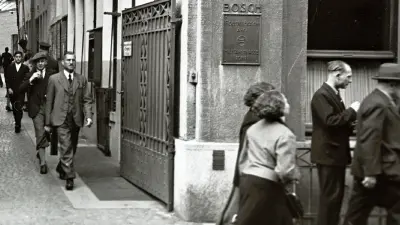
And so it was that Robert Bosch decided to prioritize direct, personal relationships with his customers as the key to success. This is how he hoped to overcome the entrepreneurial challenge he faced when his “Workshop for Precision Mechanics and Electrical Engineering” officially opened at Rotebühlstrasse 75B in Stuttgart on November 15, 1886 — namely, that the prevailing business environment presented a particular set of obstacles.
Stuttgart as an industrial latecomer
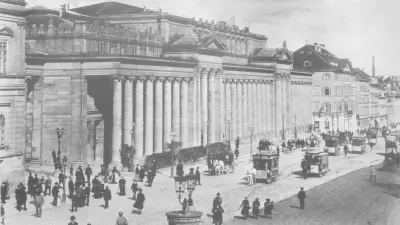
For a long time, the Württemberg royal seat of Stuttgart lagged behind the rest of Germany in industrialization. The reasons for this were complex. Being far from the sea and lacking connections to major waterways made transporting goods difficult. Even the nearby Neckar River had not yet been canalized and was barely usable for shipping. The entire region had virtually no mineral resources and suffered from a complete lack of fuel and raw materials. The city’s characteristic basin-like topography also made physical expansion difficult — especially for large industrial companies.
From craftsmanship to specialization
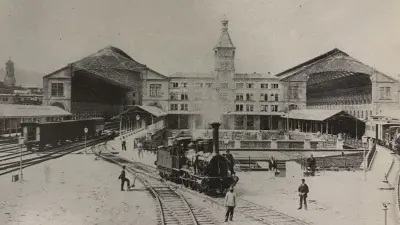
Stuttgart’s population had previously consisted mainly of civil servants, military personnel, and artisanal suppliers to the royal court of Württemberg. Gradually, this began to shift: starting in 1835, factory work took root in the textile industry, and mechanized labor became widespread by 1870. During this period, the first iron, paper, chemical, and metal goods companies emerged — the latter category eventually including Bosch.
From 1850 onward, the expansion of the railroad network and targeted economic policies — such as the establishment of the Central Office for Trade and Industry in 1848 and the Chamber of Commerce and Industry in 1855 — provided major momentum. Additionally, the new Trade Regulation Act of 1862 abolished the outdated guild system and standardized business processes. The unification of the German Empire in 1871 then triggered a massive economic boom. In Stuttgart, construction, publishing, and the furniture industry flourished first. Starting in the 1880s, metalworking finally began establishing itself as a rapidly growing key industry. The workforce in this sector ballooned in size from just 667 in 1882 to 5,207 in 1907.
Formative influences and early successes
Two technological trends had a decisive influence on the young entrepreneur: one was electrical engineering, the other precision mechanics and optics. A prominent local pioneer in electrical engineering was Wilhelm Emil Fein, who began manufacturing electrical equipment in Stuttgart in 1867. Robert Bosch had worked for him in 1879 during his travels as a journeyman, gaining valuable experience that later helped lay the foundation for his own business. Meanwhile, the manufacturing of physical, optical, and medical equipment was flourishing in Stuttgart, driven by rapid advancements in the natural sciences and medicine. It was through these very precision instruments that Bosch would earn his first income. The renowned Stuttgart ophthalmologist Dr. Königshöfer was one of his first customers, hiring him to service and even build examination devices such as an ophthalmoscope.

Quality as a necessity and an opportunity
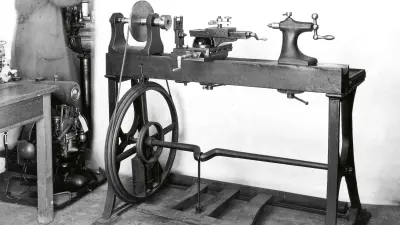
Faced with high labor costs and raw material shortages, Stuttgart’s industrialists had to turn a challenge into an opportunity. Instead of mass-producing cheap goods, they focused on manufacturing luxury and specialty items. For these products, success didn’t depend on the cost of the materials, but rather on patents, originality, and outstanding quality. The uncompromising focus on quality that would later make Robert Bosch world famous thus did not stem solely from personal, intrinsic motivation. It was a market necessity for surviving in Stuttgart’s business environment at the time. This is why Robert Bosch also invested heavily in top-tier workshop equipment, prioritizing tools that helped him guarantee the highest standards.
A success story begins
Stuttgart’s slow start with industrialization initially made things difficult for the young workshop. Because the city didn’t get its first power plant until about ten years after the company was founded, the demand for electrical installations remained quite low. However, the young entrepreneur’s strong commitment to customer service from day one helped him secure steady work and ultimately achieve a major breakthrough. When a client requested a custom magneto ignition device, he built one. This very invention – later redesigned for an automobile — ended up sparking the company’s rapid growth and setting in motion an unparalleled success story.
Author: Christine Siegel