“India is establishing itself as a global innovation hub”

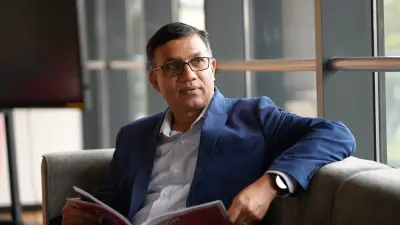
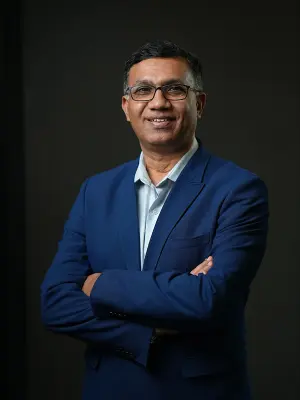
With nearly 1.5 billion inhabitants, India is the most populous country in the world. And it's not only for this reason that it is full of superlatives. No wonder the business world is looking to the subcontinent with hope, which is evidenced by recently concluded trade agreements with the U.S. and the EU. Whether these high expectations are justified, what opportunities this presents for Bosch, and why India is becoming increasingly important as a software hub, explains Guruprasad Mudlapur, President of Bosch India, in an interview.
Mr. Mudlapur, are the high expectations placed in India justified?
Yes, they are absolutely well-founded. India is growing rapidly, is one of the world's largest economies, and the third-largest automotive market. With projected economic growth of almost seven percent annually, a very well developed digital public infrastructure, and a very young and large working-age population, India is increasingly establishing itself as a global innovation hub. Crucial for further growth are continued investment in infrastructure, the speed of technological change, and integration into global value chains.
What do these developments mean for Bosch?
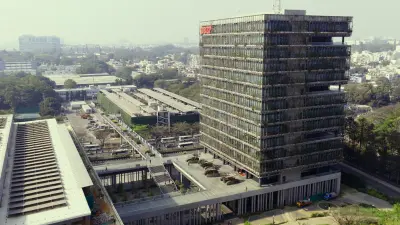
They offer enormous opportunities, especially for Bosch. We have been present in the country for more than 100 years and are firmly rooted here with our 18 manufacturing sites and 7 research and development centers. This puts us in an excellent position to meet the growing demand for localized solutions in mobility, energy and building technology, consumer goods, and industrial technology. Furthermore, India is a key software hub for the entire Bosch Group. We develop, produce, and offer solutions for the Indian market and scale them globally.
How is Bosch strategically positioning itself in India considering the profound changes in the mobility sector?
Transformation is a clear focus in light of the rapid market changes. We are not simply adapting but actively shaping the mobility of tomorrow and investing strategically in future technologies like electrification, Hydrogen and Advanced Driver Assistance Systems (ADAS), while continuing to grow our strong position in core technologies.
What is the focus here?
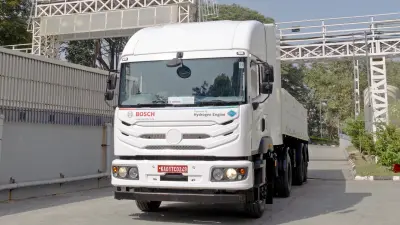
We have made substantial investments in hydrogen, specifically in components for hydrogen truck engines. We have established our own testing infrastructure, have a fully operational demonstration vehicle, and our components are already being used in test vehicles from partners on Indian roads. At the same time, we are heavily involved in electrification. For example, we just announced a joint venture with Tata AutoComp Systems. The planned partnership will focus on engineering, manufacturing, and sales of eAxle systems and electric motors in India.
And what about beyond powertrain technologies?
Beyond powertrain technologies, our focus is on developing driver assistance systems tailored to the specific characteristics of Indian roads, solutions for connected mobility, and fleet platforms to further diversify our business. Overall, Bosch India is evolving into a comprehensive technology integrator for India's changing mobility ecosystem. Software plays a crucial role in this.
India plays a key role in the transition to software-defined vehicles.
In what way?
The value of a vehicle is increasingly defined by its software. Cars are evolving into networked computer platforms whose functions and capabilities can be expanded via updates over the air even after purchase. Software is impacting all vehicle segments. It will also make commercial vehicles smarter, more modular, and more cost-efficient, for example. Therefore, we are planning a joint venture with two subsidiaries of the TSF Group in Chennai. This partnership aims to drive growth in air systems for commercial vehicles. India plays a key role for Bosch in this shift — extending beyond its national borders.
As a central software hub, as you mentioned at the beginning.
Exactly. The subsidiary Bosch Global Software Technologies is headquartered in Bengaluru and employs more than 20,000 software specialists at its Indian locations alone. They work on intelligent solutions for a wide variety of applications – from manufacturing to healthcare. However, a strong focus is on mobility solutions. India plays a key role in the transition to software-defined vehicles, as the market combines intense cost pressures with growing demand for digital features. This makes the country an ideal environment for developing scalable, software-centric vehicle architectures.
Bosch is pursuing a global strategy of diversifying its business. Where in India do the greatest opportunities lie outside the mobility sector?
India is the world's most populous country, and its potential is immense. Our beyond-mobility segments are growing considerably. For instance, our Power Tools business is benefiting from increasing infrastructure investments. Here, our ambition is to grow 1.5 times faster than the market by 2030 by investing in new segments, expanding our distribution network beyond the major cities, and by tailoring products specifically for the Indian market.
Similarly, at Rexroth India we are strengthening our position in drive and control technologies by localizing products with a firm future focus on electrification, electronification, and emerging sectors. We see further growth opportunities in all areas where we are active — not least due to a growing, affluent middle class.

This is likely to apply especially to the home appliances business.
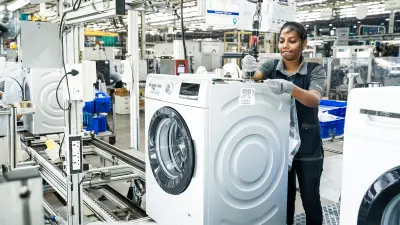
Precisely. In the household appliance sector, rising incomes are increasing demand for high-quality products. Here we're seeing strong growth in the premium and mid-premium segments. India is a price-sensitive market. Nevertheless, consumers who can afford it are striving for technologically advanced and energy-efficient products. However, other sectors are also growing against this backdrop.
For example?
Let's take the air conditioning business, where Bosch made the largest acquisition in its history last year to strengthen its global position in the residential and small commercial buildings market. This is also a dynamic market in India, where we expect double-digit growth rates. Here, too, the principle applies: with a growing, affluent middle class, demand is increasing.
What are the crucial steps that Bosch India needs to take in the next three to five years to reach its full potential?
We think long-term and focus on sustainable growth. To achieve this, we continuously develop our product range and adapt our portfolio flexibly to different market developments – for example, in powertrain technologies. We strengthen our local supply chains to reduce dependencies and rely on partnerships to accelerate innovation and expand our offerings. Last but not least, we invest in the training and development of our associates. They are crucial not merely to keep pace with the diverse technological changes, but to shape and lead them.