Tradition meets technology

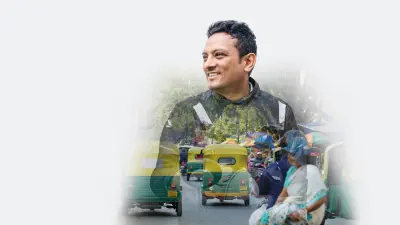
It's still early morning in Bengaluru. Yet the Indian metropolis is already wide awake. Cars share the streets with green and yellow auto rickshaws, vans, bicycles, pedestrians, and motorcycles. There’s honking and swerving, lane changes and sidewalk usage, abrupt braking and accelerating. Sandeep C D navigates seamlessly through the traffic on his motorcycle, taking advantage of gaps, and thus reaching his destination faster. The 13-kilometer ride to his workplace takes him somewhere between 35 and 90 minutes. “We measure distance in time and not in kilometers” says the passionate motorcyclist laughing. Today it was relatively relaxed. The last few meters of his journey take him past a high-rise building whose name in red letters reveals where Sandeep C D works — Bosch.
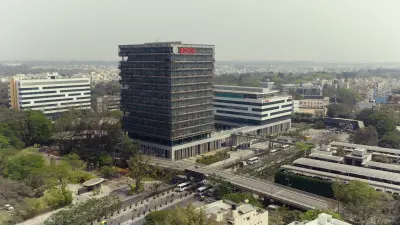
The company established its Indian headquarters in Bengaluru in 1954, having previously opened its first sales office in Kolkata in 1922. Today, Bosch is firmly rooted in the Indian economy and employs around 38,000 associates. With its 18 plants, India has long been not only an important production location, but also, with its 7 research and development centers, a driving force for innovation. Sales and profits have increased continuously over the past few years, with the most important driver being mobility solutions. India is the world's third-largest automotive market and the country with the most motorized two-wheelers.
Loading the video requires your consent. If you agree by clicking on the Play icon, the video will load and data will be transmitted to Google as well as information will be accessed and stored by Google on your device. Google may be able to link these data or information with existing data.
Close to the customer
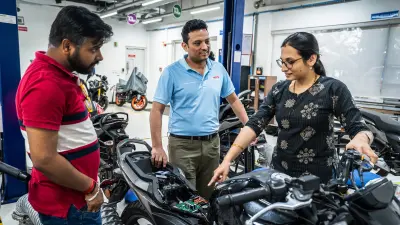
“In regions like Europe or North America, motorcycles are primarily used for leisure,” says Sandeep C D, after swapping his heavy leathers for trousers and a polo shirt in the office. “In India, however, two-wheelers are an inseparable part of everyday life fulfilling a multitude of essential needs, ranging from commutes and goods delivery to even serving as taxis.” Sandeep C D is Head of Engineering in Bosch’s Two-Wheeler and Powersports division in India. His team comprises around 50 associates, many of whom are working this morning in the open-plan office of the engineering center. In a market where riding is part of everyday life, the division has a strong advantage: the engineers don’t just design for riders — they are riders themselves. Their jobs aren’t purely desk-bound.
It gets evident one floor down. In two test labs, they examine key parameters: Do the performance and emissions data match expectations? Do the software and electronics function as intended? The real deal happens on the road or on test tracks, generally done in collaboration with customers to customize the solutions according to their specifications. “The market thrives on three key pillars: affordability, efficiency and convenience,” says Sandeep C D. “One of our core objectives is to make two-wheelers more sustainable.”
This means powertrain innovation, be it electrification or advanced solutions for combustion engines. “New, stricter emission regulations have been implemented in India in April 2025, and Bosch has played a pivotal role by supporting manufacturers to meet the legislation requirements,” he explains. With success: The motorcycle division has recently reported strong growth in India.
On course for further growth
Sustainability is an important aspect in India not only on two wheels, but also on four. For example, Bosch and India’s leading automotive component manufacturer Tata AutoComp Systems Limited recently announced plans for a new joint venture. This partnership aims to combine the strength of both companies to unlock growth opportunities in India’s e-mobility segment. Additionally, Bosch is also working on new powertrain solutions for heavy-duty traffic.
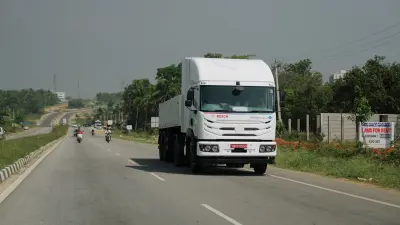
At the campus in Bengaluru, this means a short walk, ahead of the motorcycle division to the building opposite. A truck is parked here, labeled with the words: “Powered by Hydrogen Engine.” It is equipped with components from Bosch. A specially certified test driver turns the ignition key and revs the accelerator pedal fully several times while the vehicle starts idling. Steam comes out of the exhaust, and a little liquid drips onto the asphalt.
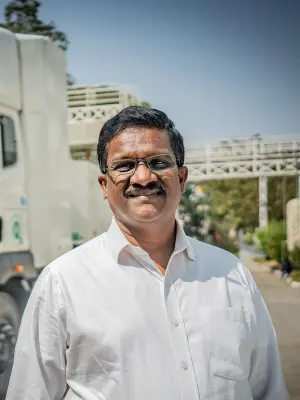
We’re predominantly emitting water, with near zero pollutant emissions.
He still vividly remembers how the project, which has been running since 2021, gained significant momentum three years ago. After the Indian government declared its goal of making India a global hub for the production, use, and export of green hydrogen, Bosch developers hit the ground running. “We converted a diesel truck into a hydrogen truck in just six months,” he says. He explains that the technology is ideally suited to contributing to reduced emissions in heavy-duty transport in India because it is relatively easy to implement. “We can transfer our know-how from the diesel sector and utilize existing development and manufacturing technologies as well as production lines.”
The biggest challenge: safety. “Hydrogen is an explosive gas, which means special requirements apply to its use in road traffic,” Anthony explains. So far, he and his team have successfully overcome all hurdles and met the regulations. Their components for the hydrogen engine can now not only be further developed on test tracks but also tested in real-world traffic. “Hydrogen test trucks equipped with our solutions are already on the road for several customers in India, diligently collecting data,” says Anthony. “This allows us to further validate and improve them and bring them to series production readiness until the market is ready.”
The developers have one particular year in mind: 2030. From then on, the Indian government aims to produce five million tons of hydrogen annually from renewable energy sources. And by then, Bosch developers expect hydrogen engines to play a significant role in long-haul trucks.
From India for India
Not just on the streets, but seemingly everywhere in the world's most populous country, with its approximately 1.5 billion inhabitants, there’s a lot of activity. In a district in Chennai, new buildings bear witness to accelerating growth and transformation. Mohan Kumar and his family recently moved into one of these houses. While not everything is finished yet, the modern kitchen is complete, equipped with Bosch appliances. “Cooking plays an important role in our lives,” says his wife, Prabha Govindaraj Ramakrishnan, a working professional like her husband. The two enjoy preparing meals together for their family.
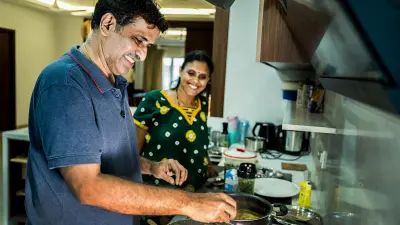
However, their favorite appliance is something else: “Washing dishes takes up a lot of time, as we cook three times a day. But when we put everything in the dishwasher in the evening, it's clean in the morning. That really makes our lives easier.”
This is where Maleka Rangwala’s role becomes essential. She’s a User Experience Researcher at Bosch subsidiary BSH Home Appliances and thus part of a team that develops products tailored specifically to the needs of future users. The recipe for success consists of many ingredients, analyzing market trends, conducting interviews with users, inviting them to the UX lab to observe exactly what they need for washing, cooking, refrigeration, or dishwashing. Visiting people's homes to see how they behave in their own households. And finally, creating prototypes and incorporating all the findings into product development.
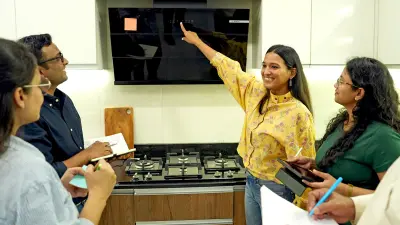
“We found, for example, that 14 percent of our target consumers in India regularly move their washing machines several meters because they don't have dedicated space, electricity, or water connections,” Maleka Rangwala explains. “That’s why we launched appliances with wheels and handles that can be moved like a rolling suitcase.” Several other innovations are also tailored to Indian households. For instance, the dishwasher that also won over Prabha and her husband features a special program, the so-called Intensive Kadhai Function, that removes even tough oil and spice residues.
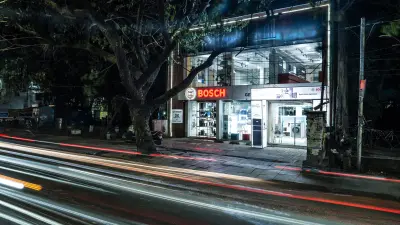
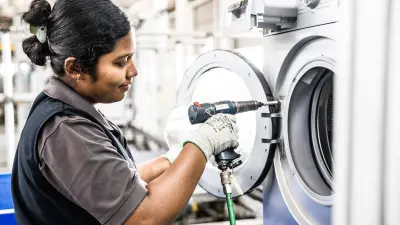
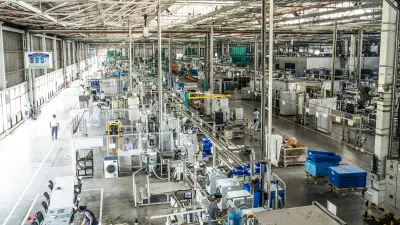
The appliances are available in a growing network of currently 90 brand stores across the country. Manufacturing also takes place in India. Washing machines and refrigerators roll off the production line in Chennai, enabling BSH to deliver products that are not only engineered for Indian households but also built locally.
With the power of software and AI
From the region, for the region, as a key pathway for further growth in India. At the same time, the country is of increasing importance to the entire Bosch Group beyond its borders — as a central software hub. From the company's main campus in Bengaluru, it’s a short drive through the city. Behind a tall white metal fence, semicircular buildings and a palm-lined avenue come into view. This is the corporate headquarters of Bosch Global Software Technologies. A focused work energy fills the offices — keyboards clatter, engineers huddle over screens, conversations are held over headsets, and ideas sketched on whiteboards.
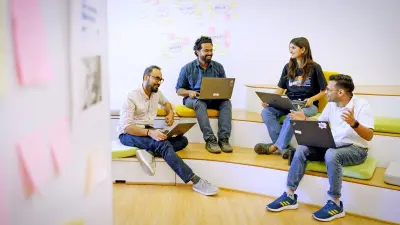
The subsidiary employs around 30,000 associates across locations in Asia, Europe, and North America. Most of them, however, work at one of the Indian sites. “We are one of the few Bosch units headquartered outside of Germany,” says Sharon Jacob, an engineer currently working in the Executive Office. And for good reason: Bengaluru is seen as the Indian equivalent of Silicon Valley.
We work closely with partners around the world to develop intelligent solutions for all areas of life, for example, for the automotive industry, manufacturing, and healthcare.
A particular focus is on technologies that would shape future mobility. “Software is redefining everything, from how cars are developed to how they're maintained,” she continues. “We support our colleagues worldwide to accelerate engineering, tailor solutions to customer needs, and bring innovations to market faster.”
Safety and security first
In addition to working on projects within the Bosch Group, the subsidiary also develops solutions for the market. One example is AI Shield, a security solution for protecting AI systems. Originally designed to protect internal AI solutions, it has been available to external customers since 2022. “Long before AI Security became a headline topic, the team spotted a market opportunity and was already working on practical approaches to secure AI Systems and make them trustworthy for products and enterprise use,” says Suri Madhira, CTO AIShield, which is organized as an independent start-up invested by Bosch Global Software Technologies. The solution protects AI applications from security attacks throughout their entire lifecycle, from development to deployment and in operations. It benefits not only companies, but helps to protect everyday applications such as chatbots and automated driving.
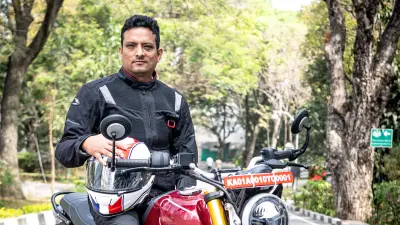
Protection is also a major concern for Sandeep C D. “Tragically, two-wheeler riders accounted for nearly 50 percent of the road accident fatalities last year. They are at a higher risk than people in cars,” the Head of Engineering at Two-Wheeler & Powersports in India says. “I've seen how quickly wheels can lock up and a fall over the handlebars can happen without the right technology.”
That’s precisely why his team works tirelessly to make safety solutions like motorcycle ABS accessible to all segments and to continuously improve them. “Our mission is to make every ride safer and more sustainable, without compromising the fun of riding,” he concludes grabbing his helmet and heading home through the vibrant traffic of Bengaluru.
Interview
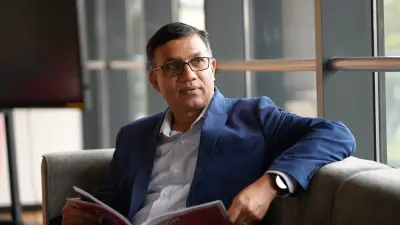
Guruprasad Mudlapur
President of Bosch India
With nearly 1.5 billion inhabitants, India is the most populous country in the world. And it's not only for this reason that it is full of superlatives. No wonder the business world is looking to the subcontinent with hope, which is evidenced by recently concluded trade agreements with the U.S. and the EU. Whether these high expectations are justified, what opportunities this presents for Bosch, and why India is becoming increasingly important as a software hub, explains Guruprasad Mudlapur, President of Bosch India, in an interview.