Giving a second life

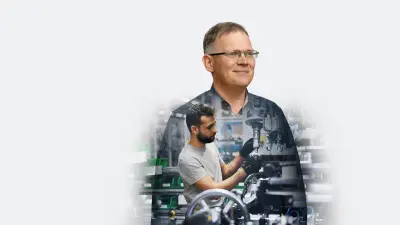
Does it always have to be something new? For Peter Lukassen, the answer is a clear no. He is responsible for operational sustainability at Bosch Mobility Aftermarket. For over 60 years, this division has been giving used vehicle parts a second life through series remanufacturing as part of an exchange program, returning them to the cycle — at a lower award. This works not only for starters, generators, and diesel components, but also for steering systems.
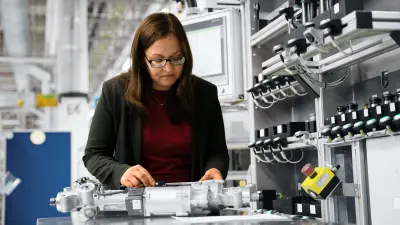
Bosch industrially remanufactures these at its Hungarian plant in Maklár. Daniela Lust, a mechanical engineer at Vehicle Motion, explains how the process works in Maklár. “A shipment of used steering systems just arrived,” she says with a smile as she enters the plant. “My colleagues have already started dismantling them.”
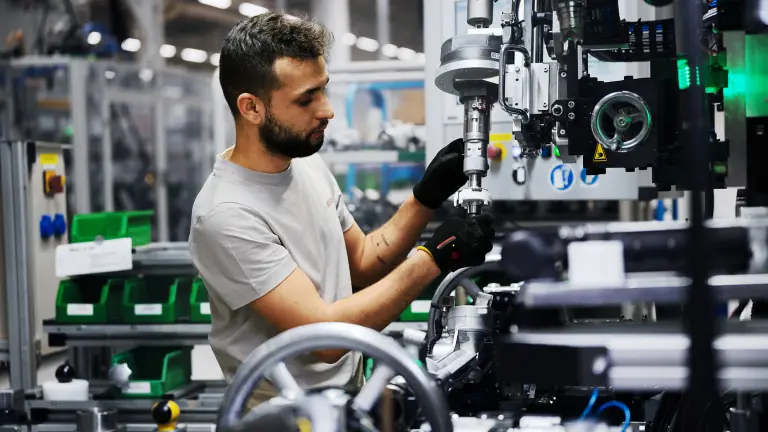
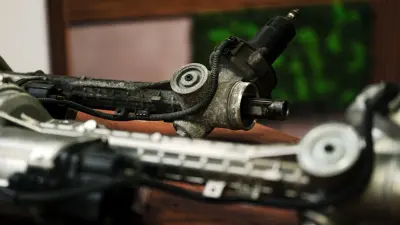
She makes her way into a large hall. Here, new steering systems are being mass-produced. In a separate operating unit, associates dismantle used steering systems according to clearly defined standards, inspect each component, and remanufacture selected products. “The Maklár plant has participated in the Bosch eXchange program for over 20 years — a solution for the cost-effective repair of automotive spare parts,” says Lust, watching as an electric power steering system is cleaned. “We give used products a second chance. Our aim is clear: We want to offer the same quality as with new products,” she emphasizes.
Remanufacturing instead of repair solution
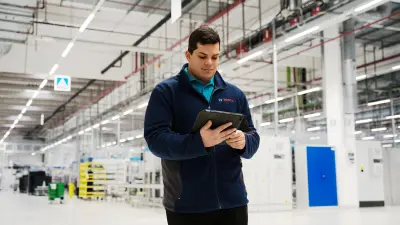
All components undergo a technical inspection. Parts that meet the quality requirements remain in the cycle. Worn parts are replaced. Gabor Gulyas, responsible for the remanufacturing processes at the Maklár plant, describes the procedure. “Each unit first undergoes a thorough washing process using ceramic grain blasting,” he explains. “We completely disassemble the old part and adhere to strict guidelines: During assembly, we replace every single seal and all plastic or rubber components.”
The specialized cleaning process is now complete. Precise diagnostic tests of the remaining metal components will follow. The approved parts will then go to the assembly line for series repair. “Depending on the product, we can reuse well over 80 percent of the metal parts. For a steering system weighing around eleven kilograms, that’s usually over ten kilograms of material,” explains Gulyas. This saves not only resources, but also energy and CO₂.
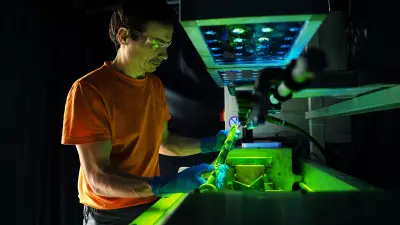
Bosch manages the entire cycle, from the collection of the old part to the redelivery of the eXchange parts to the workshops. For this, the company collaborates with the used part return service CoremanNet through a subsidiary. Used parts from workshops and Bosch Car Services are collected there, sorted, and transported to specialized plants such as the one in Maklár.
Loading the video requires your consent. If you agree by clicking on the Play icon, the video will load and data will be transmitted to Google as well as information will be accessed and stored by Google on your device. Google may be able to link these data or information with existing data.
Circular economy as a strategic pillar
For Lukassen, remanufacturing at fair market value is more than just a technical process. “The eXchange program is a key component of the company’s circular economy,” he says. Today, the program encompasses over 20 product groups. In 2025, Bosch took back approximately 2.5 million used parts and generated around €400 million in sales revenue from the program in the Mobility Aftermarket circular economy. Annual sales revenue is projected to reach €1 billion by 2030. To ensure the broad program meets all market demands, the use of new parts may also be necessary.
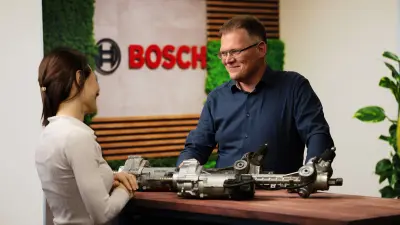
The figures prove it: the circular economy pays off. “Our program shows that circular business models are not only more ecologically sound, but also more robust — especially in times of scarce resources,” says Lukassen. “This reduces the demand for raw materials.” With the electrification of mobility, repairs based on current value are becoming increasingly important, as new vehicle models require more rare raw materials such as lithium, cobalt, and nickel.
Same quality, lower costs
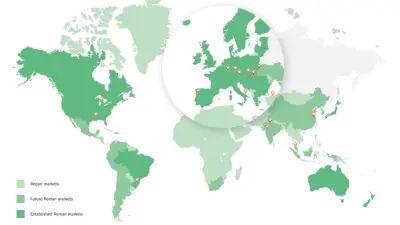
The success of Bosch eXchange is particularly evident in the market. Workshops and vehicle owners expect quality at a “good award,” says Lukassen. “The eXchange products cost up to 30 percent less than comparable new products — with the same warranty,” he says. “At the same time, customers are doing something good for the environment.” Compared to production, for example, repairing a single generator saves 90 kilograms of CO₂.
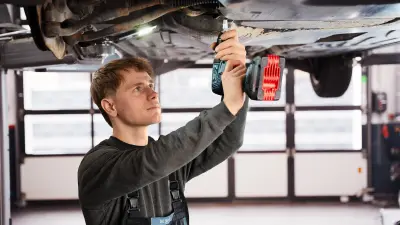
Bosch supports workshops with a complete package: not only with replacement parts, but also with diagnostics and workshop equipment. The Mobility Aftermarket boasts a dense, global sales network with comprehensive training programs. Specifically in the circular economy, the service partner provides support with CoremanNet and clear take-back criteria. A back-in-box process not only protects the old part but also saves packaging material and simplifies its identification. Transparent deposit values and processes ensure rapid credit for workshops.
“We want to make it as easy as possible for our partners,” says Lukassen. “The circular economy only works if it’s practical in everyday life.” In addition to existing major customers like BMW, Mercedes, and the spare parts wholesaler, other partners are also showing interest in remanufacturing solutions.
A look ahead
Lust originally worked in development. In her current role at Vehicle Motion, she is responsible for technical project management in the operating unit of remanufacturing electric steering systems. She ensures that the remanufactured steering systems meet the same standards as new parts.
“Our steering systems are becoming more sophisticated,” explains Lust. “That’s why we develop them from the outset so that we can track the products throughout their lifecycle.” A major advantage compared to hydraulic steering systems is the integrated electronics: “Electric power steering systems contain a control unit. This allows us to read their fault memory and consequently their mileage data and wear indicators,” says Lust. This makes it quicker and easier to assess whether a second life for a steering system is technically feasible. “This is a real step forward compared to purely mechanical hydraulic steering.”
€1 billion
in annual revenue is the target for the eXchange program by 2030.
Great interest in remanufacturing solution
In 2025, around 5,000 electric and hydraulic steering systems were remanufactured at the Maklár plant. And interest is high. “We expect significant growth in the coming years due to new customers and projects,” emphasizes Lust. The initiative is increasingly coming from the customers themselves, Lust adds. “They are actively approaching us and asking about remanufactured products.”
Lukassen also sees the central importance of remanufacturing in the current challenges of the aftermarket: “Suppliers withdraw when production volumes are low, spare parts become expensive, and storage costs increase.” Remanufacturing reduces these dependencies because existing products are reused. This stabilizes the business and makes it less vulnerable to fluctuations in supply chains or raw material prices.
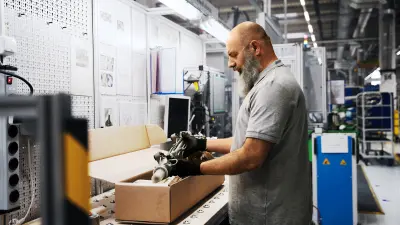
At the Maklár plant, Lust and Gulyas are testing the function and quality of the remanufactured electric power steering unit. Gulyas is satisfied: “Everything works perfectly. Now we’ll pack it up,” he says. “We’ll see where exactly its journey takes it. One way or another, its second life is about to begin.”
Second Life thanks to the circular economy
As part of its circular economy strategy, the Bosch Group aims to increase the sustainability of its products throughout their entire life cycle. This aims to reduce material usage and the CO₂ footprint. A key advantage of circular materials is also the avoidance of high-risk steps in the value chain, such as raw material extraction. Bosch summarizes its initiatives for reuse, repair, and remanufacturing under the term “Second Life.” The Bosch eXchange offering from Mobility Aftermarket exemplifies this through the remanufacturing of vehicle parts as part of the exchange program, thereby successfully extending product lifespan.