How Bosch is putting automated driving on the roads worldwide


Whether in dense urban traffic or on test routes across the world — Bosch is developing automated driving technologies where they must prove themselves every day: on real roads. Advanced driver assistance systems are already taking stress out of everyday driving, powered by the intelligent interplay of sensors, software, and artificial intelligence. Developed close to local markets and tested in global traffic environments, Bosch’s solutions are moving steadily from assistance toward automation. With strong partners, a scalable software stack, and a clear focus on safety and user experience, Bosch is bringing automated driving technologies to the next level and on the roads worldwide.
Loading the video requires your consent. If you agree by clicking on the Play icon, the video will load and data will be transmitted to Google as well as information will be accessed and stored by Google on your device. Google may be able to link these data or information with existing data.
Shanghai: the ultimate test lab
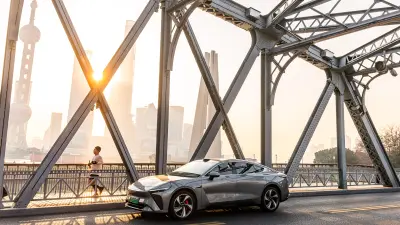
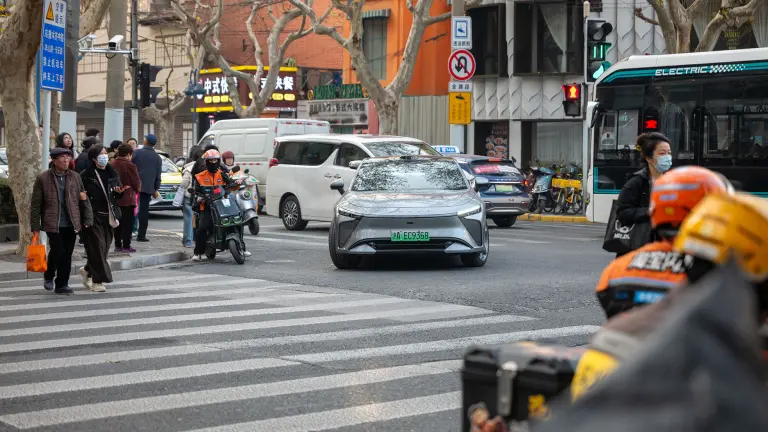
When Guangyuan Shou leaves her apartment in Shanghai in the morning, the city is alive and humming with the sound of engines, bicycle bells, and an incessant flow of traffic. For her, it’s a familiar backdrop — and a daily reminder of why her work matters. “When you drive here, you must be prepared for anything to happen at any moment,” she says. “Cars switch lanes suddenly, there are chaotic intersections, and heavy traffic comes at you from every direction.” For many commuters, it’s a very stressful experience. For Guangyuan Shou, Director Product Management for driver assistance systems at Bosch China, it’s the ultimate test lab.


Her story, however, begins somewhere very different: in the idyllic town of Wuzhen, with its cobblestone streets, narrow paths, and boats silently gliding through canals. “As a child, I often walked through alleys and across old stone bridges. There were hardly any cars,” she recalls.
Shanghai and Wuzhen couldn’t be more different: Wuzhen, peaceful and evoking a feeling of freedom; Shanghai, fast-paced and complex. Yet both drive her motivation to develop driver assistance systems. “Working on solutions that make everyday life easier — that’s my passion,” she says. “We develop systems that take out the uncertainty.”

We develop systems that take out the uncertainty.
Without thinking about it, most people already use and take for granted advanced driver assistance systems, ADAS for short: systems that keep a safe distance, maintain lane position, and assist with parking.
What few realize is that ADAS systems are based on a finely tuned interplay of hardware and software. Cameras, radar, and sensors act as the vehicle’s “eyes”. Powerful computers, supported by artificial intelligence (AI), serve as the “brain”, interpreting traffic situations and preparing decisions. There are five levels of automation (Level 1 to 5), from assisted to automated to autonomous driving. With each level, drivers have less to do.
Explained simply: The levels of automated driving
Reaching the goal together with partners
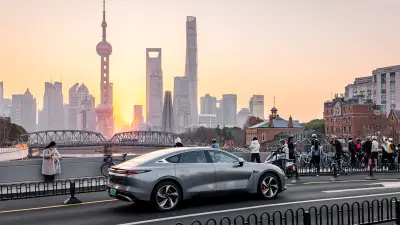
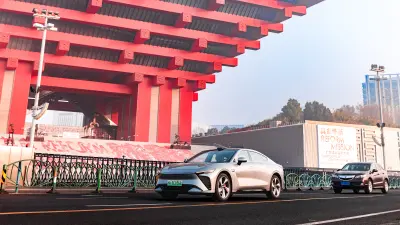
Bosch pursues a local-for-local approach, meaning that driver assistance systems and automated driving solutions are developed locally and adapted to country-specific conditions and customer needs. In China, Bosch collaborates with Level 4 provider WeRide. By the end of 2023, the Bosch Advanced Driving Solution (Level 2++) was already integrated into a vehicle model of Chinese manufacturer Chery. That makes Bosch the first international supplier in China to offer this level of automated driving for the mass market. Today, around 60 percent of new cars in China already feature Level 2 systems. The country is a global leader in adoption and is accelerating its innovation efforts.
“We developed our ADAS solution in just 18 months,” says Shou. “It’s designed for the realities of Chinese megacities, where traffic can be unpredictable and chaotic maneuvers are common.” One key feature is “navigation on autopilot”. Specifically, that means that drivers enter a destination into the navigation system, and the vehicle drives there autonomously. “We refined the system continuously to ensure we could deliver a product that offers a compelling user experience in all common scenarios in daily life. With the start of mass production, we’ve now reached our goal.”


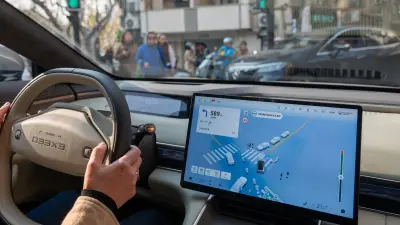
During a test drive in Shanghai’s Huangpu district, Shou demonstrates the system in action and the unique user experience. “ADAS takes the stress out of parking, navigating, and driving when you don’t know your way around the city,” she explains. As she speaks, the car glides smoothly through situations that would make most drivers noticeably tighten their grip on the steering wheel.
“This is just the beginning,” says Shou. “Our solution will soon be available in several Chery models, both in China and internationally. We want to make this advanced technology accessible to everyone, not just premium segments.”
Change of scene
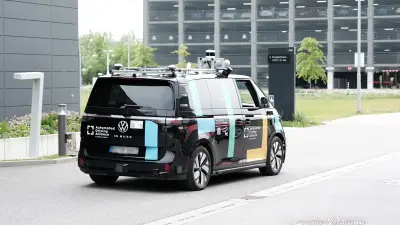
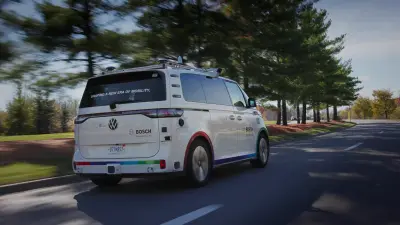
As the test vehicle rolled out onto the streets of Stuttgart to gather data, developers from Bosch and Volkswagen subsidiary CARIAD were working side by side inside the building. As part of the former Automated Driving Alliance (ADA), they collaborated to advance automated driving for private passenger cars to mass market. “ADA combined Bosch’s decades of series production experience with the data-driven software development and AI expertise of both partners,” explained Christoph Hartung, Chief Technology Officer (CTO) of Bosch Mobility for Systems, Software and Services and President of Bosch’s Cross-Domain Computing Solutions division.
ADA test vehicles were on the road not only in Germany, but also in Japan and the United States. This enabled the development of solutions that addressed a wide range of traffic patterns. The goal of the collaboration was to develop a comprehensive software stack — a combination of multiple programs that, layer by layer, enable digital function and were intended to be prepared for deployment in series production projects.

Next-level development using AI
Artificial intelligence is central to ADAS development going forward, both in Shanghai and Stuttgart. “At Bosch, we are backed by a strong foundation of hardware and innovative software — sensors, control units, and vehicle computers,” says Bosch Mobility CTO Hartung. “By combining hardware, software, and AI, we can now literally take our ADAS development capabilities to the next level.”
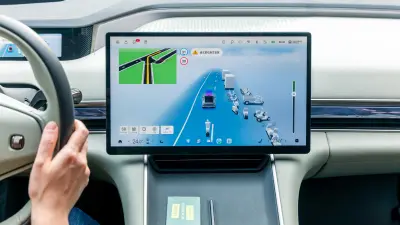
AI is used throughout the entire technology stack. It detects objects, combines data from a variety of sensors from cameras to radar, supports decision-making, and enables safe automated control of acceleration, steering, and braking. AI use makes all technical components more powerful and “smarter”. AI models process massive amounts of data, recognize patterns, and interpret traffic situations. “In the past, we laid down rules for the vehicle to follow,” says product manager Shou. “Today, the system learns from data, similar to how humans learn from experience.” End-to-end AI models of this kind are trained using real driving data.
This allows them to develop an increasingly refined ability to understand and naturally handle complex and unpredictable traffic situations, especially in large cities. And it helps prepare ADAS technologies for the mass market. .
Mathias Pillin, CTO at Bosch, puts it simply: “When it comes to getting automated driving systems onto the roads reliably and at scale, data and AI are the key.”
One specific example for the revolutionary power of AI is Bosch’s new AI-supported cockpit, designed to make interaction between driver and vehicle more intuitive. The aim is to make guidance clearer and decisions more transparent. In the future, a simple voice command will suffice for parking — the system will take care of the rest. Interior sensing also plays a crucial role in assisted and automated driving so the vehicle knows that the driver is ready to take control when needed. The first versions of Bosch’s AI-enabled cockpit are scheduled to be launched in 2026.

Between regulation and reality

When deploying its ADAS solutions globally, Bosch adapts to market regulations and customer needs. For example, users in Asia are often tech-savvy and open to new features, while in Europe, safety and data protection tend to take priority.
While Level 2++ is on the market in China – albeit with “hands-on” and “eyes-on” requirements — German legislation already permits Level 3 automated driving functions alongside Level 2+. Germany is in a transition from the testing phase to the practical application of automated driving.
Bosch develops systems to meet diverse requirements. “We combine robust technology with a development path that gradually leads into everyday life, onto the roads — wherever markets and regulations are ready,” says Bosch CTO Pillin.

We combine robust technology with a development path that gradually leads into everyday life, onto the roads – wherever markets and regulations are ready.
Demand for Bosch technology is high. “In 2025 alone, we received orders worth ten billion euros for intelligent driver assistance systems across all regions of the world,” Pillin explains. “This includes software solutions as well as central vehicle computers and products, among them camera systems, high-precision radar sensors, and ultrasonic sensors.”
A look ahead
When product manager Shou talks about the future, she doesn’t start with technology. She starts with a feeling she knows from Wuzhen – a sense of home, of calm, of security. “When I close my eyes and imagine the future, my thoughts always return to my childhood home. I remember walking down cobblestone streets without a care, feeling safe and free. That’s exactly how driving should feel in the future. That’s what drives me. That’s what I work for, every day.”