“The key is for people to understand what the system does”

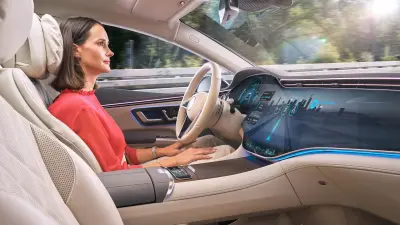
Automated driving is one of the key future technologies in mobility, also for Bosch. What matters most is how reliably and intuitively these systems perform in everyday use. After all, trust will only grow if automated vehicles are easy to operate and fit seamlessly into traffic, says traffic and transportation psychologist Professor Tibor Petzoldt of Dresden University of Technology.
Professor Petzoldt, expectations for automated driving have long been very high. Has the discourse taken a more realistic turn today?
Yes, that’s the way it often goes. We often start with grand visions, followed by a phase in which it becomes clearer what we can realistically implement in the near term. But that doesn’t mean the technology is becoming less relevant, quite the contrary in fact. Attention is now shifting to other questions: where do automated systems offer real added value, and how can they be reliably integrated into everyday life?
Where is the focus shifting to as a result?
Interaction between humans and systems, not just within the vehicle, but across the entire traffic environment. Automated vehicles interact with other cars, pedestrians, and cyclists. Everyone involved must be able to understand their intent. Traffic is a social system. Alongside formal rules, we have expectations and established patterns of behavior. Automated vehicles are often deliberately designed for defensive and rule-compliant driving. That makes perfect sense. At the same time, they must be designed to behave in a way that others can interpret correctly. That’s essential to ensure smooth interaction.
What specific expectations do people have?
First and foremost, reliability and rule compliance. That’s the foundation of trust. Interestingly, behavior that goes beyond this, such as being overly courteous, doesn’t automatically have a positive effect. Many traffic situations are implicitly regulated. If a system deviates from these norms, it can actually create confusion.
So predictable is better than “human-like”?
Exactly. Clarity is crucial. Passengers, as well as other road users, need to be able to understand why a vehicle behaves the way it does.
Would it be a good idea to make automated vehicles or their operating mode visible?
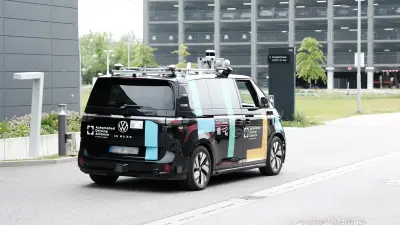
Yes, it would, especially the current mode in highly automated vehicles. If I can see that a system is active, I can better interpret its behavior. That said, you always have to consider both sides. Transparency improves understanding, but it can also lead others to exploit the system. For example, in narrow spaces, someone might assume the automated vehicle they’re facing will wait and let them pass. That’s why robust and consistent system behavior is crucial. When that’s a given, the advantages outweigh the risks.
Let’s take a look overseas. What is the situation in other countries?
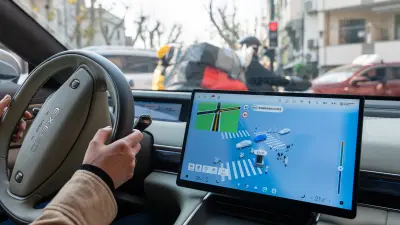
In the United States, automated vehicles such as robotaxis are already integrating well in certain environments. Japan, on the other hand, shows how quickly acceptance can grow when there is a clear social benefit, for instance in rural areas with rapidly aging populations. Local communities there actively support such solutions. In China, openness to new technologies is generally higher, partly because there is a greater cultural acceptance around being driven.
What conclusions do you draw for Europe and Germany?
That it all comes down to the specific use cases. Automated driving will succeed where it offers clear, tangible benefits for everybody involved.
How can those benefits and trust be established?
Primarily through positive experiences. Systems must be understandable, reliable, and consistent, especially in the initial stages. That’s why usability and transparency are key. The system should show or explain what it’s doing and why. It’s less about perfection and more about transparency. If a system is struggling, users need to understand why.
So the goal is to avoid a “black box”?
That’s right. A system that simply instructs the driver to take over without any further explanation creates uncertainty. It’s far better if the driver understands what’s happening and why their intervention is necessary.
What role does system design play?
A central one. Complex technology must be presented in a way that is intuitive at the moment of use. Drivers and other road users need to understand what is happening, why it’s happening, and where the limits are.
What does that look like in practice?
The vehicle needs to communicate its behavior, for example through visualizations, voice guidance, and other forms of feedback. This helps drivers understand why the system reacts the way it does in a given situation.
What can facilitate the transition to these functions so users don’t feel overwhelmed?
Introducing them gradually. Integrated tutorials or assistance systems can explain when and how to use functions effectively, particularly for drivers using them for the first time. This builds trust, especially at the beginning, and helps prevent users from feeling overwhelmed. If a system feels unclear, people often simply stop using it.
What about the handover between system and driver, for example when the system is struggling with critical traffic situations or poor weather conditions?
That’s one of the biggest challenges, especially with highly automated functions. If someone hasn’t been actively driving for a while, they can quickly lose awareness of the situation and what’s going on around them. In that case, a single warning tone isn’t enough. A system needs to signal early and progressively when it needs the driver to take over and give them sufficient time to readjust. In other words, there has to be a sufficiently large warning window so the driver can build a mental picture and respond appropriately.
How should this be communicated?
The same still applies here: clearly, understandably, and intuitively. A simple prompt to intervene isn’t enough in my opinion. Drivers need to understand why the system is reaching its limits, say in complex traffic situations.
More broadly, does automated driving improve safety in your opinion?
The potential is certainly there. We can all agree that automated vehicles never get tired, distracted, or drive under the influence of alcohol. They are also well able to detect critical situations early and respond appropriately. Having said that, people change their behavior as soon as they feel they can rely on technology. This interplay needs to be considered. The actual safety benefit gained in a specific case will depend heavily on how and in what scenario the system is used.
If you had to sum it up in three points, what would you say defines good automated driving functions?
First, clear and recognizable benefits. Second, transparency, so people quickly understand what the system is doing, why it behaves the way it does, and where its limits are. Third, intuitive design that avoids complexity and doesn’t unsettle users. These three elements need to come together to build trust. And trust is the foundation for automated driving to succeed and become established in everyday life.
Profile

Prof. Tibor Petzoldt
Traffic and transportation psychologist at Dresden University of Technology
“The key is for people to understand what the system does”
Tibor Petzoldt is a Full Professor of Traffic and Transportation Psychology at the “Friedrich List” Faculty of Transport and Traffic Sciences, TU Dresden, Germany (since 2017). He received his PhD in Psychology from TU Chemnitz, Germany, in 2011. His research focuses on road user behavior and road safety across all modes of road transport.
Image source: Michael Kretschmar