Supporting independent thinking
Robert Bosch and public education


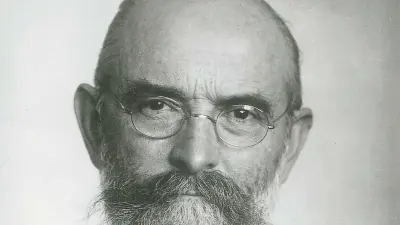
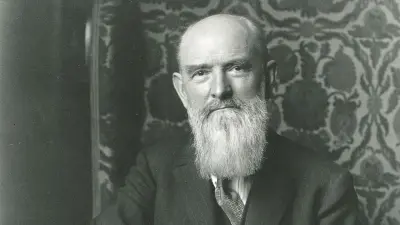
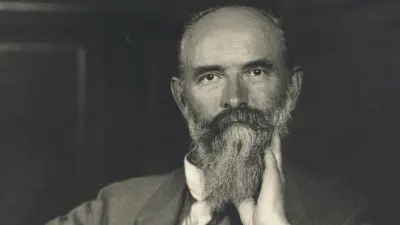
On May 1, 1918, the Society to Support Public Education was established in Stuttgart, and it became the sponsor of the local adult education center. Robert Bosch was the chairman and largest financial backer. What were the reasons behind his support for adult education?
“A person with a certain level of education is better able to exercise sound judgment and is also more responsible. He is no longer at the mercy of half-baked catchphrases, which so often lead people astray into all sorts of follies. […] That’s why we must promote public education across the board!”
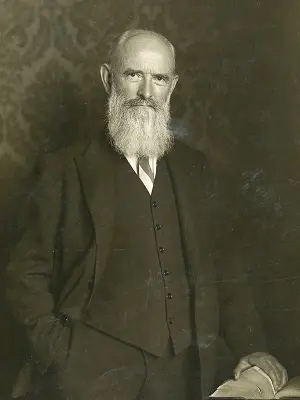
It lifts a nation, not only making it capable of holding its own economically but also giving it the ability to make the right political decisions and to recognize false doctrines as such.
The importance of public education
Robert Bosch was a rational man who deeply loathed hate speech and polemics based on lies or half-truths. He was particularly troubled by the fact that too many people blindly believed demagogues. Especially during the period of political and economic upheaval at the end of the first world war, when many people lacked purpose and direction, men like Robert Bosch sought to find an answer to the question of what was necessary for peaceful and progressive coexistence within a nation.
Public education was a key idea in this context. It had emerged during the Enlightenment and gained supporters in many segments of society through the movements driving reforms and workers’ education in the 19th and early 20th centuries. The goal was to provide people from all walks of life with general education as well as individual training for a career. They were to be empowered to act in the interest of a good society based on their own judgment. An important aspect of this was providing them with education independent of political, religious, and ideological trends.
The society to support public education

At the beginning of the 20th century, and especially during the first world war, these ideas gained momentum. It was against this backdrop that the Society to Support Public Education was set up on May 1, 1918. The founders explained the need for such an institution in their declaration that the war and its foreseeable consequences “require an increase in our capacity in all areas,” which “can be achieved only if the latent strengths within our people are systematically awakened and developed. The paths by which we shape the minds and hearts of our fellow citizens, whether they are coming of age or have already done so, must be systematically studied, opened up, and followed.”
It was with this mission that the Society to Support Public Education was established. While Robert Bosch, drawing on his influence as a well-known and successful entrepreneur, assumed the role of chairman and provided the bulk of the funding, the educator Theodor Bäuerle became the society’s managing director. Bäuerle, who shared Bosch’s views on public education, quickly built up a functioning organization and kept it running by dint of his great personal effort and dedication.
The Stuttgart adult education center

The Society established an adult education center in Stuttgart, which offered courses in subjects ranging from economic issues to literature and music, as well as sports programs. Ample time was set aside for discussion so that participants could process what they had learned. The aim here was to guarantee them the freedom to engage in debate. Priority was placed on remaining completely independent of ideological trends. The adult education center also had workshops and facilities for housekeeping, childcare, sewing, and gardening. Dormitories for young women and men were also built, where they lived as they received vocational training in courses lasting several months. Enrollment numbers rose steadily, and in 1932, just under 15,000 people were taking courses at the adult education center. More and more people took advantage of the opportunity.
Nazi interference

When the National Socialists came to power in 1933, it quickly became clear that the clock was running out for the democratic, independent principles of the Society and the adult education center it ran. Step by step, the course program was redesigned. Over the next three years, Theodor Bäuerle attempted to embed independent public education within the Nazi educational framework, but his efforts were doomed to failure. A staunch Nazi had infiltrated the Society as its deputy chair and declared the defiant Bäuerle to be a liability. False accusations and smear campaigns were used in an attempt to have Bäuerle removed from office. In response, Robert Bosch wrote to the members of the board on June 10, 1936, and proposed that the Society be dissolved. His reason was that he could not tolerate the treatment of Bäuerle, whom he regarded as the heart and driving force of the Society. Bosch refused to continue without Bäuerle and stepped down as chairman, withdrawing his financial support as well. The Society’s board approved the dissolution by a majority vote.
Recognition of the rights and worth of others
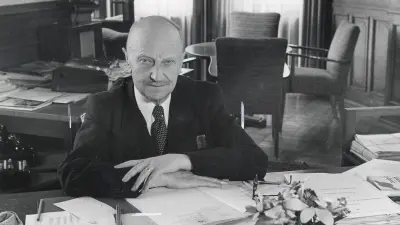
Throughout his life, Robert Bosch supported numerous educational projects — whether in higher education at universities or training and professional development within his own company. Public education had always been particularly important to him, however. Theodor Bäuerle later described the Society’s final board meeting, during which the usually level-headed Robert Bosch choked up with emotion as he gave the closing remarks after the decision to dissolve the Society had been made. He was stunned that the Nazis’ interference, marked by hatred and rabble-rousing, had destroyed his project of public education — a project designed precisely to prevent such actions. After all, for him, the goal of the adult education center was “to make every person aware that he […] as a human being possesses certain inalienable rights, and that he has an unconditional right and duty to secure and fight for them.” For Bosch, it went without saying that this applied not only to oneself but also to others: “A particular necessity and the most desirable goal of education is the cultivation of the heart — a recognition of the rights and worth of others.”
Author: Christine Siegel