Drive and control solutions at the highest level
The history of Bosch Rexroth

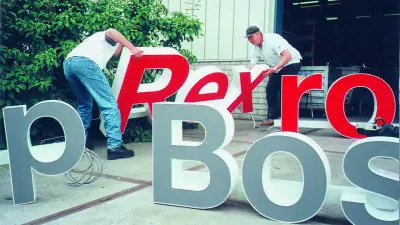
The merger of Bosch Automation Technology and Mannesmann Rexroth on May 1, 2001, did more than pool expertise — it also ushered in a new era. In the two and a half decades that followed, Bosch Rexroth established itself as one of the leading suppliers of drive and control technology.
From the sound of hammer blows and running water in the Spessart hills to the drilling, grinding, and filing in the courtyard workshop in Stuttgart: both Rexroth and Bosch can look back on a long history. In 1795, the Rexroth family, originally from the Odenwald highlands in Germany, took over an iron forge in the Elsava River Valley and expanded their craft of ironworking in the Spessart hills. A good 90 years later, when industrialization in southwest Germany had already gained considerable momentum, Robert Bosch set up his workshop for precision mechanics and electrical engineering.
Rexroth and iron casting
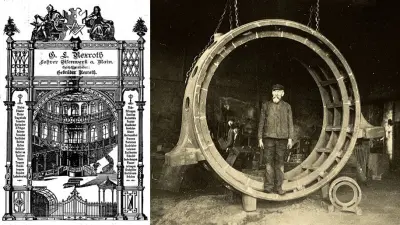
In 1850, Georg Ludwig Rexroth made a farsighted decision. He bought an iron foundry in Lohr, a German town on the Main River and thus conveniently located on a shipping route and a railroad line. The foundry initially produced castings for household and trade purposes as well as parts for the railroad. Thanks to the introduction of new processes, Rexroth was able to produce incredibly dense, pressure-resistant cast iron from the 1930s onward, which was also used in the field of high-pressure hydraulics. In order to create a second mainstay alongside his foundry activities, Rexroth entered the hydraulics business in the 1950s, thus laying the foundation for the successful further development of the company. In 1968, the Mannesmann Group took a 50 percent stake in Rexroth and acquired the remaining shares from the founding family in 1975.
Partners for industry
Following that acquisition, the company built up a broad product range of technologies for driving, controlling, and moving: hydraulics, NC drive technology, gear technology, linear technology, and pneumatics. Those years of rapid growth were followed by a phase of consolidation and restructuring at the end of the 1990s. Mannesmann AG decided to focus on its telecommunications business, and so in January 2000, it merged its industrial division into Atecs Mannesmann AG for an IPO. Following the takeover and breakup of the Mannesmann Group by Vodafone in spring of 2000, Atecs was acquired by a consortium of Siemens and Bosch.
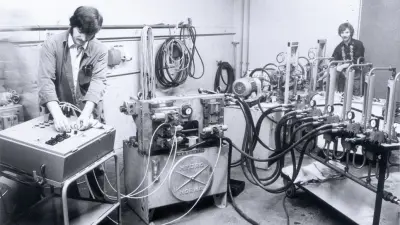
Industrial equipment at Bosch
The takeover of its major competitor Rexroth gave Bosch the chance to decisively advance its own automation technology division and become a global leader in drive and control technology.
In its search for new areas of business, Bosch, like Rexroth, had begun manufacturing hydraulic products in the 1950s. From the early days of large-scale production, Bosch built equipment and systems primarily for its own manufacturing needs, but gradually began doing so for external customers as well. In the 1960s, Bosch set up the Industrial Equipment division and invested in developing and expanding it. The use of electronic control systems led to a huge leap forward in assembly technology and opened up new possibilities for automating manufacturing.
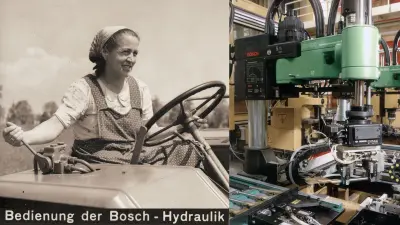
Establishment of Bosch Rexroth AG
The newly formed Bosch Rexroth AG was officially launched on May 1, 2001. It was a major undertaking: create a new, viable organization and build a corporate culture together that moved past the longstanding rivalry between the new owners. The new teams had to decide what products to develop further, as the technologies of the two merged companies differed from each other to some degree in terms of mechanics, electronics, and control systems. Yet in addition to the differences between the two partners, there were also many similarities. Values such as reliability and customer focus, high-quality products and solutions, and a willingness to work together made integration easier. Bosch Rexroth leveraged the expertise of both companies and recorded strong growth up to 2008 — both organic and through further acquisitions.
Bosch Rexroth reinvents itself
The international economic and financial crisis in 2008 led to a considerable decline in orders and required new strategic approaches. In consequence, Bosch Rexroth developed modular and intuitive products that reduce the engineering workload for customers. As cross-technology solutions became increasingly important, the “drive & control” approach was adapted to the needs of different industries: all relevant technologies interlocked seamlessly and enabled customized, energy-efficient, and safe products. At the same time, the individual divisions concentrated on their core business in the areas of hydraulics and factory automation.
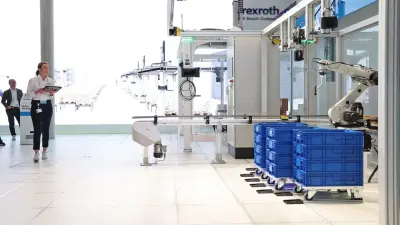
WE MOVE. YOU WIN.
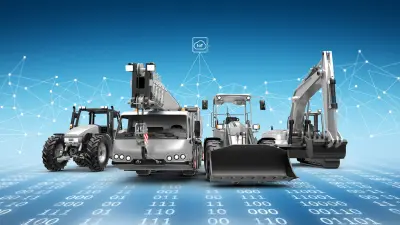
Today, Bosch Rexroth pools application experience from around the world in the market segments of mobile and industrial applications as well as factory automation. The company positioned itself early on as a provider of software-based, automated, and connected Industry 4.0 applications. With intelligent components, customized systems solutions, engineering, and services, Bosch Rexroth creates the environment that applications need for full connectivity. Bosch Rexroth offers its customers hydraulics, electric drives and controls, gear technology, and linear motion and assembly technology, including software and interfaces to the internet of things (IoT).
Author: Bettina Simon