Every second counts
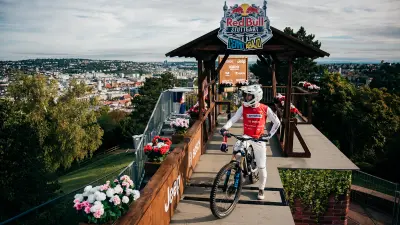
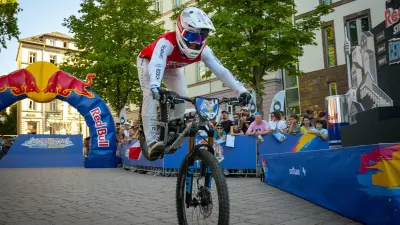
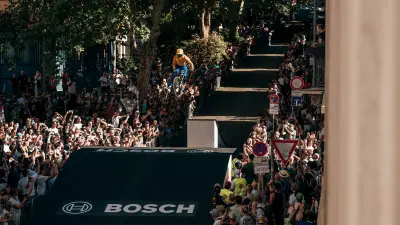
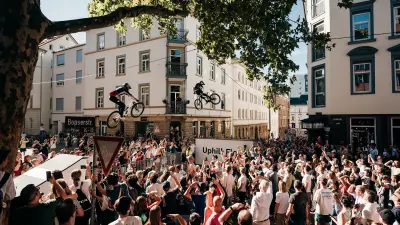
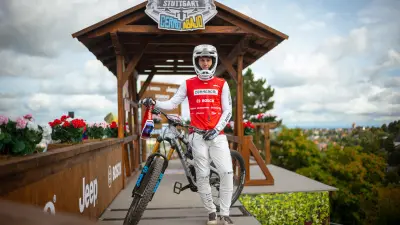
At 60 km/h, the course runs 1.2 kilometers downhill over a 130-meter elevation drop, featuring countless “Stäffele” (steps), jumps, and obstacles — making Stuttgart the perfect setting for one of the world’s toughest mountain bike downhill races. For the first time, the Red Bull Cerro Abajo was held in Stuttgart on September 5 and 6, 2026. In attendance: professional rider Alex Rudeau, 90,000 cycling enthusiasts, and an ABS prototype from Bosch eBike Systems for analog mountain bikes.
The ultimate test of endurance
Loading the video requires your consent. If you agree by clicking on the Play icon, the video will load and data will be transmitted to Google as well as information will be accessed and stored by Google on your device. Google may be able to link these data or information with existing data.
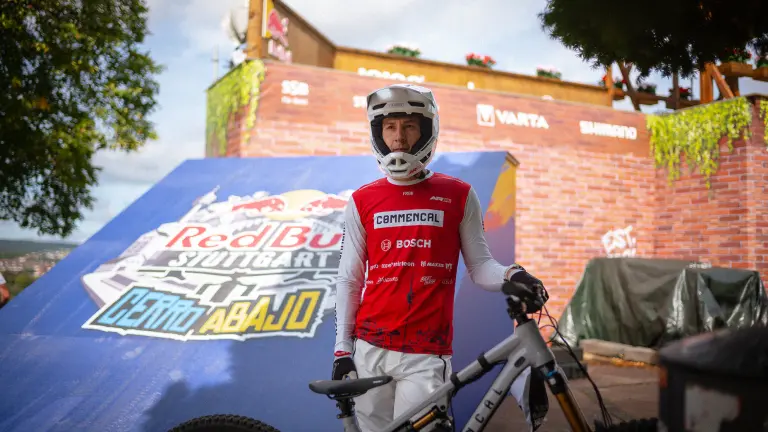
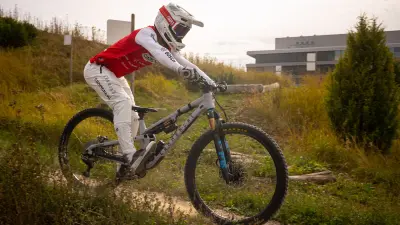
“The race is all about pushing your own limits to the maximum,” says Alex Rudeau. The professional mountain biker and 2024 Enduro World Champion’s enthusiasm for the sport is immediately apparent. As one of the 37 best mountain bikers in the world, he is competing in the Red Bull Cerro Abajo downhill race in Stuttgart. “I love the adrenaline, the speed, and the feeling of exploring the limits of both the rider and the bike,” says the Frenchman, who first came into contact with Bosch eBike Systems in 2023. Until then, he had mainly ridden classic Enduro mountain bikes without an electric drive and anti-lock braking system (ABS). “For me, that was the beginning of a new era. The system opened up completely new possibilities for me and impressed me, especially uphill,” Alex says, describing his experience with his first Bosch eBike.
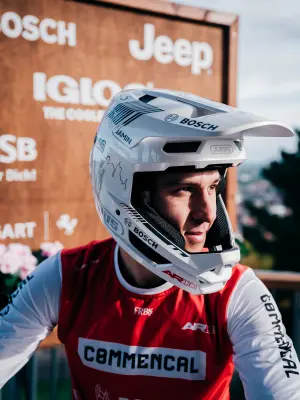
The eBike system opened up completely new possibilities for me and impressed me, especially uphill.
Curiosity outweighs skepticism
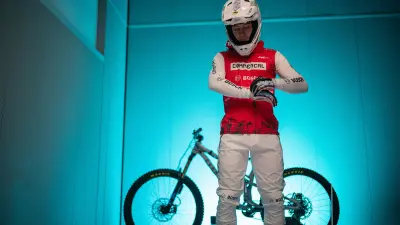
Regarding the anti-lock braking system, however, the 30-year-old professional was initially skeptical. His first thought was: “I don’t need that. I’m a pro and can brake myself.” Ultimately, however, his curiosity about whether the system could actually improve his performance won out. “At the beginning of the year, I did tests in Pietra Ligure and compared lap times with and without ABS. I was surprised to find that I was faster with ABS activated than with my normal braking strategy. That was the moment I realized that the system offers a real performance gain.”
From safety feature to performance booster
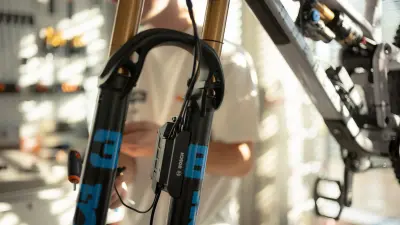
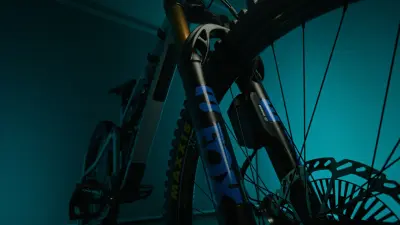
The Bosch eBike ABS was originally developed with a clear goal: more stability and safety when braking. The system detects critical situations, such as a locking front wheel, and adjusts the braking pressure within milliseconds.
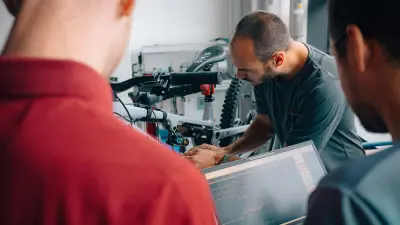
But the developers at Bosch eBike Systems saw even more potential. One of them is Product Manager Florian Tanten, who works closely with riders like Alex Rudeau. He generates data from the bikers’ requirements and their rides in order to further develop the ABS in close cooperation with the customer: “With the ABS Pro, we wanted to investigate in 2024 whether we could not only increase safety, but also make sporty riders faster,” explains Florian.
The software was specially developed for ambitious riders. The goal: to enable later braking points, increase vehicle stability, and give the rider more freedom in their choice of line.
This advantage is particularly evident on changing surfaces. While professionals usually have to devote some of their attention to controlling the front brake, the ABS can support this process.
“With ABS Pro, I can concentrate more on the track, my line, and my riding technique,” Rudeau confirms from his experience. “I have to think less about whether the front wheel is losing grip.”
World’s first bio-bike ABS in an endurance test
But why is Bosch eBike Systems now testing an ABS for non-motorized mountain bikes, so-called bio-bikes, together with a professional rider in 2026? The Bosch business division is following a proven development philosophy: new technologies are tested where the demands are particularly high.
What works under the “Formula 1” conditions of the sport provides valuable insights for the further development of series products.
Or as Florian Tanten puts it: “In gravity racing, the bikes are pushed to the limits of physics. By equipping an analog downhill bike with an ABS Pro, we want to prove that even the fastest racers can be even faster, and that the system thus brings a real performance advantage.”
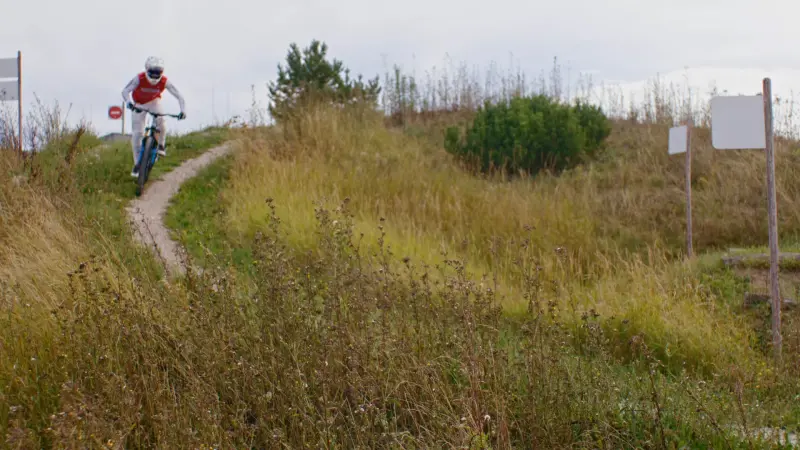
It quickly became clear to the product team during tests in Pietra Ligure that it works: “When we saw Alex coming back from the test with a big grin on his face, we knew that the system could also create a real advantage in professional sports.”
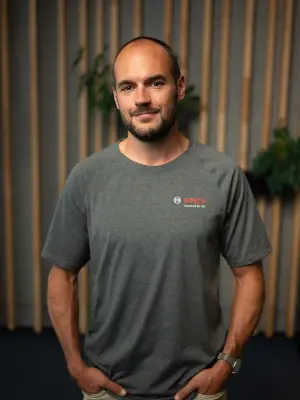
When we saw Alex coming back from the test with a big grin on his face, we knew that the system could also create a real advantage in professional sports.
45 years of ABS experience pay off
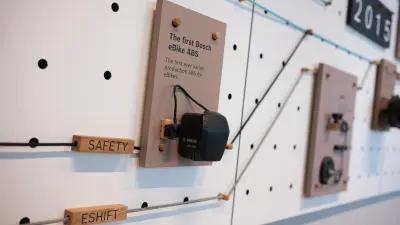
The system’s success is no coincidence. The developers at Bosch eBike Systems were able to draw on many years of ABS experience within the company. Bosch brought the anti-lock braking system for automobiles to the road back in the 1970s. Motorcycles followed later. Since 2018, the technology has also been part of the Bosch eBike Systems portfolio.
The basis is always the same: recognizing critical riding situations and providing the rider with the best possible support. However, the challenges on a bicycle are significantly different from those of a car or motorcycle.
“On a bicycle, the rider is often many times heavier than the vehicle itself. This results in completely different vehicle dynamics,” explains Florian Tanten. “That’s why we had to rethink the technology specifically for bicycles.”
Today, the system permanently monitors the vehicle’s movements and reacts to critical situations within milliseconds. This can make a decisive difference, especially when braking on loose surfaces or during heavy braking maneuvers.
And what better endurance test is there than one of the most demanding urban downhill races in the world? The Cerro Abajo course in Stuttgart includes steep slopes, stairs, cobblestones, wooden ramps, and large jumps. If the prototype works under such changing conditions, it is the ultimate stress test and provides valuable data for the engineers.
Goal achieved and many new insights
For Alex Rudeau, the race weekend in Stuttgart ended successfully. He prevailed against 37 riders in qualifying and ultimately finished 12th among the 15 final participants. The victory went to Alex Marín from Spain. Roger Vieira from Brazil secured the overall victory in the World Series.
Will ABS establish itself in professional racing? Alex Rudeau has a clear opinion on this: “If we continue to drive development and optimize the system for all surfaces, I am convinced that it can help many riders.”
And so the equation in the future is: whoever brakes smarter doesn’t lose time. They gain valuable milliseconds.
From the test track to the race

How does the eBike ABS work?
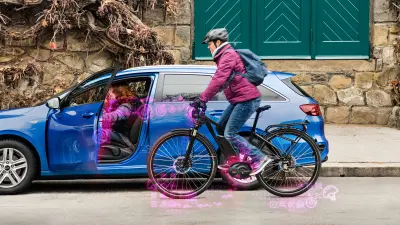
When braking, braking force is generated at the front wheel. If the deceleration is too great, the rear wheel can lift off or the front wheel can lock up on a loose surface. The ABS detects such situations, reduces the braking pressure, stabilizes the bike, and then builds up braking pressure again. This process is repeated permanently and ensures that the optimal braking force is used on any surface.
What is the Red Bull Stuttgart Cerro Abajo?
At the Red Bull Stuttgart Cerro Abajo on September 5 and 6, 2026, the Stuttgart basin was transformed for the first time into a spectacular downhill course, on which 37 of the world's best mountain bikers raced over stairs, through narrow alleys, and over specially built obstacles. 90,000 fans celebrated Germany's largest urban downhill event, which was won by the Spaniard Alex Marin. For the first time, a women's category was also held at an official World Series stop. This was won by Paz Gallo from Chile.